
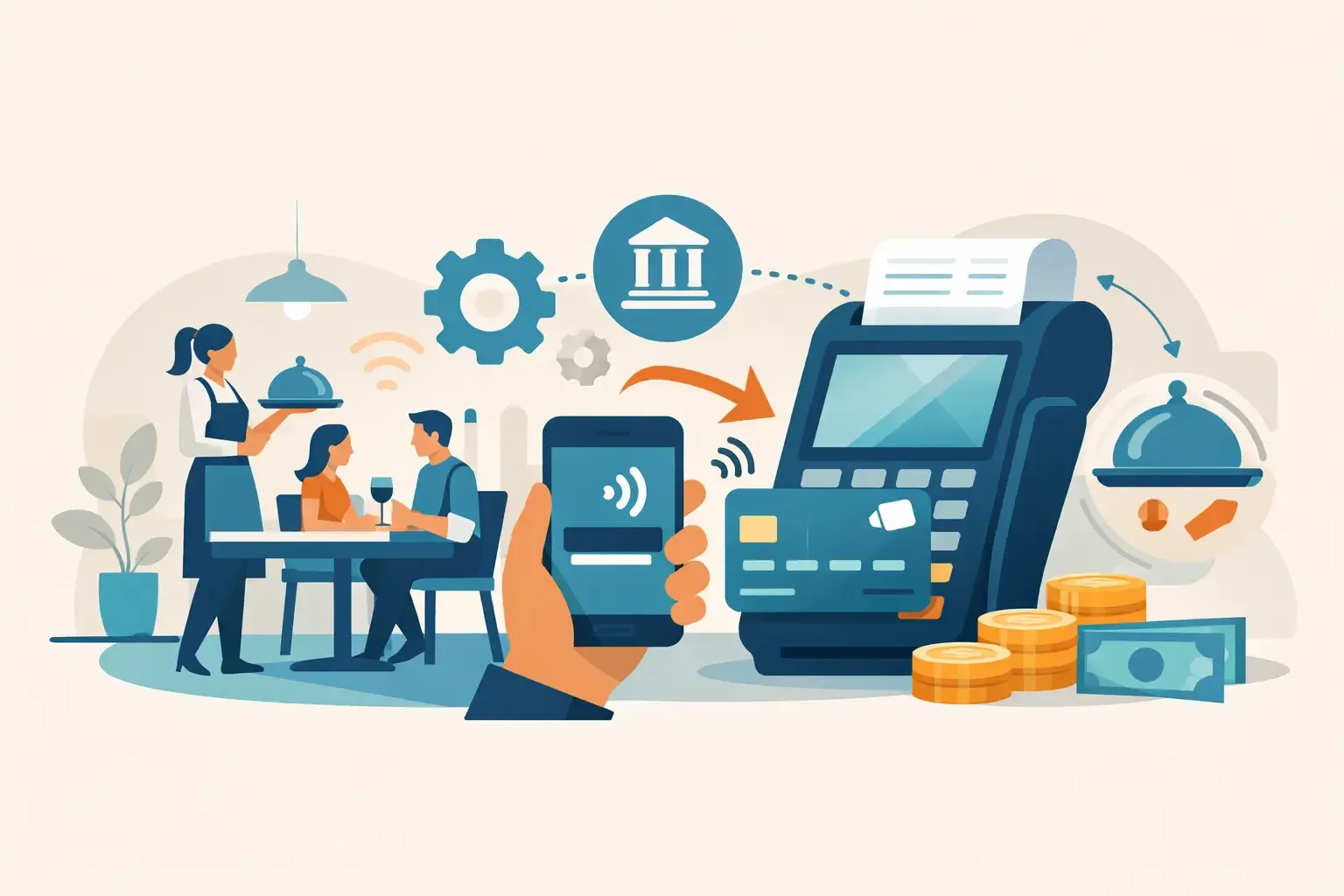
When the team loses time giving change, correcting till errors or managing queues at peak times, the problem is not just payment: it is the entire operational flow. Understanding how to automate payments in a restaurant is therefore a management decision with a direct impact on speed of service, cash control and the customer experience.
In a restaurant, payment is one of the most sensitive moments of the operation. It is where queues build up, recording errors occur, till discrepancies increase and friction arises at a stage when the customer has already decided to spend. If this point fails, service loses efficiency and profitability suffers.
Why automating payments in a restaurant makes a difference
Automating does not just mean swapping a manual process for a machine. It means reorganising the operation to reduce repetitive tasks, control cash better and free the team for higher-value roles such as customer service, delivering orders and managing the service.
In practice, an automated payment system can reduce the time it takes to settle the bill, minimise human error in cash handling and strengthen security at the point of sale. In high-turnover environments such as quick-service restaurants, cafés, canteens or venues with continuous service, this gain is immediate. Less time at payment means greater service capacity.
There is also a less visible but critical advantage for those who manage operations: control. When cash is validated, counted and stored automatically, the risk of shrinkage, incorrect change or till inconsistencies falls significantly. This affects the daily close, internal audit and the predictability of the operation.
How to automate restaurant payments without complicating the operation
The right question is not just which technology to install. The right question is where the friction lies and what kind of automation solves it with a real return.
In a traditional table-service restaurant, the priority may be automating cash management at the counter or front desk. In these cases, an automated till solution lets staff take payment without touching the cash directly. The system validates notes and coins, calculates change precisely and closes the transaction more securely.
In a quick-service or takeaway concept, the gain may be greater with self-service kiosks. Here, customers order and pay at the same point, reducing queues and easing pressure on the team. This approach is especially effective in operations with standardised menus, high volumes and a need to speed up service at peak times.
In hybrid operations, it makes sense to combine solutions: for example, kiosks for self-ordering and automated cash systems at the counter. The most effective automation rarely comes from a single piece of technology. It comes from how the different touchpoints work together.
The main automation models at the point of sale
There are several ways to automate payments in a restaurant, and the choice depends on the type of service, footfall and the balance between cash and electronic payments.
Automated cash management systems are suited to businesses where physical cash still carries significant weight. They accept, validate, store and dispense change without direct manual intervention. The benefit is clear: fewer errors, more hygienic service and greater till security.
Self-service kiosks are better suited to operations focused on speed, customer autonomy and shorter queues. They are particularly useful in quick-service restaurants, food courts, busy bakeries or made-to-order concepts. As well as automating payment, they help organise the order from the outset.
There are also scenarios where integration with invoicing software and the POS is decisive. If automation does not communicate well with the sales system, it creates a new problem instead of solving the old one. That is why technology should fit the existing operation, not force the restaurant to work around limitations every day.
What to assess before investing
The decision to automate should be based on concrete operational indicators. Frequent queues at payment, recurring till discrepancies, excessive time spent on closing tasks or heavy pressure on counter staff are clear signs that the process needs to evolve.
But not every restaurant needs the same answer. A small venue with low volume and little cash use will have different needs from a chain with several outlets. The investment should be aligned with the type of operation, the customer profile and the pace of service.
Four factors are worth analysing. First, the volume of transactions per hour. Second, the percentage of cash payments. Third, staff turnover and the need to simplify processes. Fourth, the real cost of errors and time lost at the till. This assessment shows whether the priority is cash automation, self-service or a combined solution.
Implementation is another important point. A technically advanced solution loses value if it requires excessive training, changes working habits too much or meets resistance from the team. The best automation improves day-to-day work without creating unnecessary complexity.
Operational benefits you can measure on the ground
When automation is applied well, results appear on several fronts. The first is productivity. Service becomes faster, the team gains time and the point of sale can handle more customers without increasing resources in the same proportion.
The second is security. Reducing direct contact with cash lowers the risk of losses, internal errors and till exposure. In operations with several shifts, this advantage is particularly important because it reduces disputes when cashing up and improves traceability.
The third is consistency of service. Payment no longer depends so much on each employee’s individual experience. This matters in businesses with high staff turnover, where simplifying the process helps maintain a steadier standard.
There is also a commercial effect. A faster, more organised payment experience improves the overall perception of the service. Customers may not value the technology itself, but they do value a process that is simple, quick and error-free. And that influences repeat visits.
Where automation can fail
Automation does not solve everything on its own. If the problem lies in the menu, kitchen organisation or lack of coordination between teams, payment technology will have a limited effect. Automation works best when it is part of a broader review of the operational flow.
There is also the risk of choosing wrongly. Installing kiosks in a concept where customers expect highly personal service can meet resistance. Relying solely on electronic payments when a significant share of customers use cash can create friction. And deploying equipment without proper technical support can jeopardise business continuity.
That is why the process should start with a diagnosis, not a catalogue. The right technology depends on the reality of the business, volume, type of service and customer behaviour. A consultative approach tends to deliver better results than a decision based solely on purchase price.
A smarter approach to modernising the restaurant
For many operators, automating restaurant payments is no longer about a modern image. It is a practical response to pressure on margins, labour shortages and the need to operate with more control. Modernising the point of sale is no longer optional. It has become an operational lever.
This is where a specialist company makes a difference. When the solution is designed for the sector, adapted to the restaurant’s real context and implemented with a focus on results, the investment is no longer just technological but structural. SelfPay Portugal positions itself precisely here: helping face-to-face operations automate payment and service with solutions suited to their reality.
The smartest decision is not the one that introduces the most technology. It is the one that removes the most friction with the least waste. In a restaurant, that often starts at the moment the customer wants just one simple thing: to pay without waiting.


