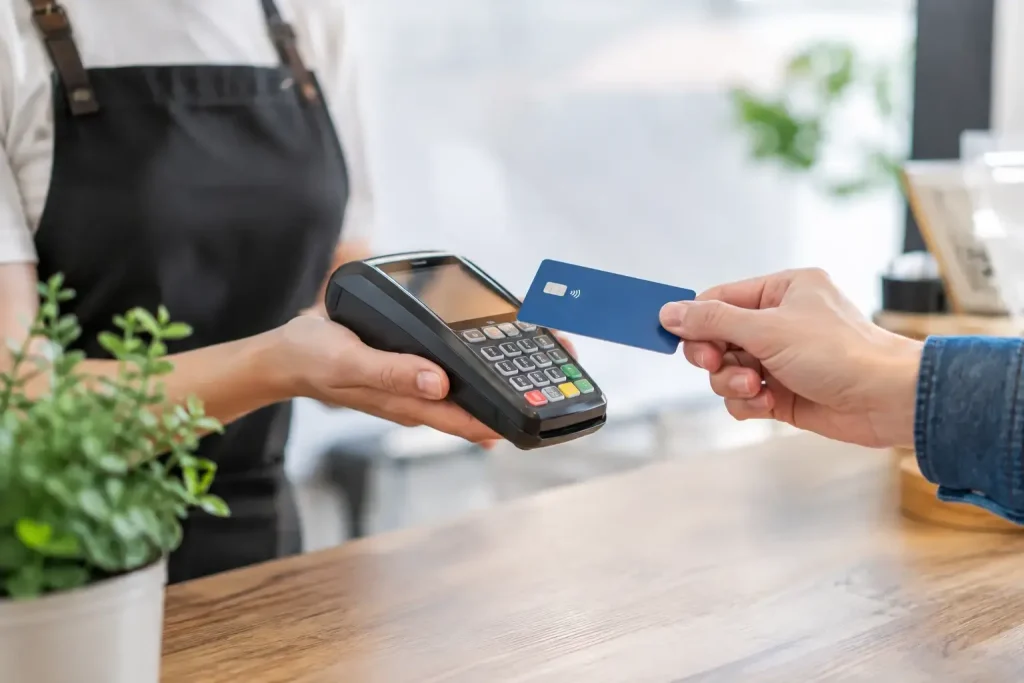
A slow payment, a cash discrepancy or an overloaded reception desk are not just minor operational obstacles. In a restaurant, shop or hotel, they build queues, increase pressure on staff and shape how customers see the business. Integrated payment software lets you treat these moments as part of a single process, linking payment, customer service, cash management and operational information.
For in-person businesses, integration is no longer purely a technology question. It is a management decision: who takes payment, how, what data is recorded, where errors can arise and how long each transaction takes. When these steps work in isolation, the business depends on manual checks and routines that consume resources every day.
What integrated payment software is
Integrated payment software is a solution that coordinates the various payment methods and points with the systems that support the operation. It can communicate with the point of sale, payment terminals, automated cash management machines, self-service kiosks, booking platforms or invoicing systems.
The aim is not simply to accept card, cash or digital payments. It is to make sure each transaction is recorded consistently and triggers the right action in the service process. In a restaurant, for example, an order placed at a kiosk can go straight to the kitchen without any further intervention. In a shop, cash received can be counted, validated and stored automatically, without staff having to work out change or open the cash drawer.
The depth of integration depends on the business model. A small operation may want faster counter service and fewer change errors. A retail chain may value standardised procedures across shops, central oversight and consistent data for analysis. The principle is the same: reduce repetitive tasks and connect payments to the real operation.
Why integration has an impact on the business
Many service problems start after the customer decides to pay. Staff need to confirm amounts, prepare change, issue documents, close bills or validate bookings. When each system requires a different action, the seconds add up and the risk of error increases.
With integrated payments, information is shared between the equipment and the management software. This reduces duplicate records and makes cashing up more predictable. Instead of manually comparing sales, receipts, cash movements and electronic payments, the manager works with processes that are structured from the outset.
There is also a security dimension. Frequent cash handling creates exposure to errors, shortfalls and attempted fraud. Automated cash management systems validate notes and coins, calculate the exact change and limit access to cash during the shift. Staff stay focused on customers while the cash is better protected.
This improvement does not mean technology always replaces people. In services where advice and personal relationships are decisive, staff still play a central role. The difference lies in removing administrative tasks that add no value for the customer.
Where integrated payment software creates most value
Restaurants with faster service
In restaurants, peak periods leave no room for slow processes. Queues at the counter, repeated orders and payment errors directly affect the ability to serve more customers. Self-service kiosks integrated with the ordering system let customers choose, pay and send their order to the kitchen or preparation area.
This model is particularly suited to fast food, shopping centres, high-turnover venues and operations with clear menus. It does not remove the need for staff, but redistributes them to tasks such as preparation, delivery, cleaning and customer support. In table-service restaurants, the priority may be different: speeding up the final payment and making sure invoicing keeps pace with the bill.
Retail with cash control
In retail, payment is the last contact before the customer leaves the shop. If there is a wait, difficulty getting change or a need to correct amounts, the whole shopping experience loses its flow. Integrating the point of sale with an automated cash management solution reduces these points of friction.
Equipment such as Cashmatic systems automates the acceptance, validation and dispensing of cash. Each transaction is linked to the sale, the cash in the till is tracked more accurately and cashing up becomes simpler. For shops with high footfall or several tills, the gain lies as much in speed as in the consistency of daily control.
Hospitality with available receptions
In hospitality, reception handles critical moments: check-in, key handover, payments, answering questions and managing late arrivals. An automated check-in system can let guests complete part of the process on their own, including validating the booking and paying where applicable.
Roommatik solutions are relevant here because they help extend service availability without requiring a reception permanently dedicated to repetitive tasks. The choice should suit the type of property and the guest profile. A boutique hotel may use automation to free staff for a more personal welcome; a property with late arrivals may prioritise autonomy and operational continuity.
Self-service laundrettes and unattended operations
In a self-service laundrette, how easy it is to pay determines whether the service is used. Customers expect to select the machine, pay and start the cycle without relying on constant assistance. Integrating kiosk, payment methods and machines reduces interruptions and makes it easier to manage an operation with fewer staff on site.
Here, reliability is decisive. A communication failure between payment and machine generates immediate complaints and requires manual intervention. So, rather than choosing an attractive screen, it is essential to ensure technical compatibility, proper support and clear processes for exceptions, refunds and maintenance.
What to assess before implementing
The best solution is not necessarily the one with the most features. It is the one that resolves the operation’s specific constraints and integrates with the systems the business already uses. Before going ahead, map the customer and payment journey: where the order starts, who confirms the amount, where the invoice is issued, how cash is handled and how the day is closed.
Compatibility with the point-of-sale or management software should be confirmed from the start. A poorly defined integration can create exactly the problem it is meant to solve: duplicated information, parallel processes and reliance on manual checks. It is also important to assess scalability. A solution suited to a single site should be able to accommodate new tills, new kiosks or new locations if the business expands.
The customer experience deserves the same attention. An overly complex kiosk can slow down service; a payment process with too many steps can lead to abandonment. The interface should be clear, fast and suited to the context, including accessibility options and simple instructions where service is unattended.
Finally, implementation should include training and follow-up. Even intuitive systems require staff to know how to handle exceptions, resolve incomplete payments and keep the equipment in good condition. Automation works best when it comes with defined procedures and a partner who knows the sector where the solution will operate.
Automation designed for each service point
SelfPay Portugal works with specialist solutions for restaurants, retail, hospitality, laundrettes and other in-person or digital payment settings. This sector-based approach makes it possible to assess not only the equipment but also the operational flow that makes it useful: the till, the counter, the reception, the kiosk or the self-service area.
Investing in integrated payment software and equipment is not just about modernising the premises. It is about creating the conditions to serve customers faster, reduce avoidable errors and gain greater control over every transaction. The best starting point is to observe where the operation loses most time every day, because that is where automation can start delivering concrete results.