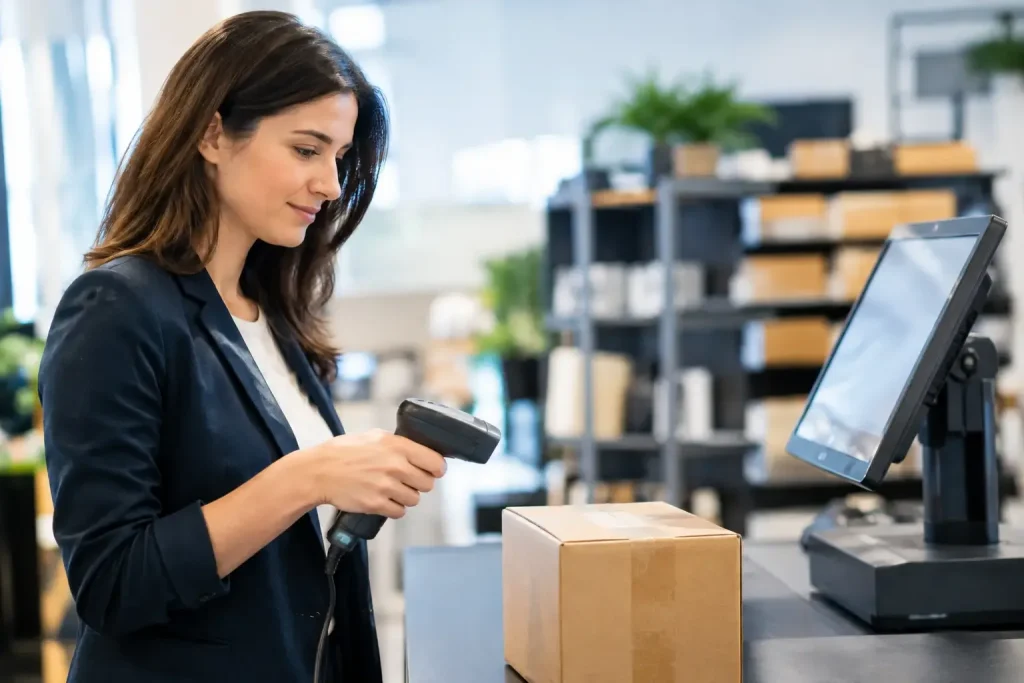
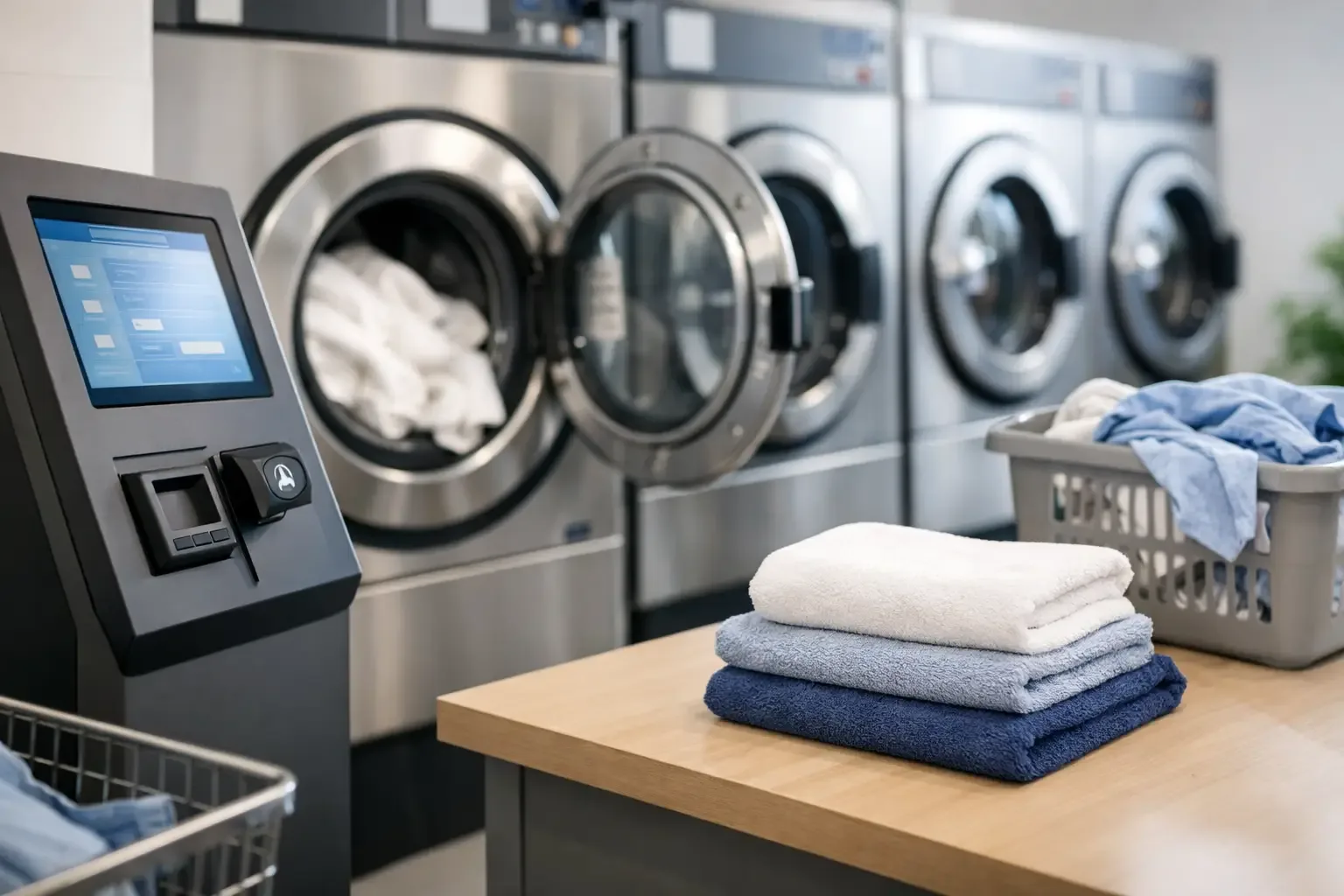
A self-service launderette depends on rhythm, availability and control. When payment fails, customers hesitate in front of unavailable machines or management wastes time on change, counting and minor incidents, the operation starts to lose margin. This is where a self-service solution for launderettes stops being just a piece of equipment and becomes an operational decision.
In a business where staff are scarce or absent for much of the day, the payment system has to work consistently. Accepting coins or cards is not enough. It must provide a simple customer experience, reduce on-site call-outs and keep visibility over what is happening at each service point. For launderette operators, that means less friction for users and more control over revenue.
What a self-service launderette solution should solve
Many launderettes started with basic payment models suited to small, lower-volume operations. That format can work at the beginning, but it soon creates limitations when the business grows, extends its hours or starts serving more demanding customers. Today, consumers expect autonomy, speed and a range of payment methods.
A self-service launderette solution should meet three core needs. The first is to allow simple, intuitive payments with no unnecessary steps. The second is to ensure operational control, both over the amounts received and over machine usage. The third is to reduce reliance on people for repetitive tasks, freeing up management time.
In practice, this means integrating automated payment equipment, clear on-screen interfaces, acceptance of different payment methods and the ability to organise how the machines are used. In more mature operations, it can also mean centralising payment for several machines at a single point, simplifying both the customer experience and the running of the premises.
Where automation creates real value
The most common mistake is to see this decision as just a change of technology. In a launderette, automation directly affects the operating model. It reduces the burden of loose cash, limits collection errors, cuts interruptions caused by poor coin acceptance and makes the service more stable throughout the day.
For customers, the impact is immediate. A clear, fast and predictable payment process increases their confidence in using the premises. In urban areas, residential areas with high turnover or tourist locations, this predictability has commercial value. Ease of use encourages repeat visits and improves the perception of the business as professional.
For management, the gain lies in control. Knowing how much was charged, how it was paid and when usage peaks allows decisions to be based on operational data rather than estimates. This helps adjust prices, promotions and maintenance schedules, and even plan future expansion.
Centralised payment or payment at each machine
Not all launderettes are laid out the same way, so choosing the right solution depends on the format of the premises. In some cases, it makes sense to keep payment at each machine. In others, a centralised kiosk offers clear advantages, especially when the aim is to standardise the experience and simplify management.
A centralised system tends to be more efficient when there are several washers and dryers, different programmes and a steady flow of customers. The user selects the service at a single point, pays and activates the corresponding machine. This model simplifies interaction, reduces scattered hardware and makes future upgrades easier.
In smaller operations, the decision may depend on the initial investment, the layout of the premises and growth expectations. The key is to avoid makeshift solutions that solve today’s problem but create obstacles a year from now. In launderettes, the hidden operating cost of a limited system can be greater than the difference in investment for a better-prepared solution.
Less cash, more security and fewer errors
Cash still matters in many settings, but handling it manually brings risk and takes time. Inconsistent counts, the need to top up change, trips to collect cash and discrepancies at closing are problems every operator knows. An automated payment solution reduces these friction points.
When the goal is to professionalise the operation, security is no longer a secondary argument. Better control of the cash received, restricted physical access to takings and fewer human errors have a direct impact on the reliability of the business. In addition, digital or hybrid payment methods tend to better meet the expectations of customers who no longer plan their visit with coins in their pocket.
This does not mean every launderette should do away with cash. In some areas, it makes sense to keep that option. The point is how cash is handled. Automating acceptance and management lets you keep serving different customer profiles without loading the operation with avoidable administrative tasks.
Customer experience is also an operational variable
In self-service launderettes, the customer experience does not depend on counter staff. It depends on the premises, the signage, how easy payment is and how clear each step is. If the process causes confusion, queues or activation failures, the perception of quality drops quickly.
That is why the interface of the chosen solution is as important as the payment technology. Customers should understand what to do without assistance, even on their first visit. This matters even more in locations with lots of occasional users, such as tourist areas, areas near holiday lets, student residences or busy city centres.
A good solution does not complicate things. It organises them. It presents options clearly, cuts unnecessary decisions and confirms each step. This operational design has a commercial effect because it reduces drop-offs, cuts requests for help and conveys a more modern image.
What to assess before investing
Choosing a self-service launderette solution requires a realistic view of the operation. The first criterion is expected usage volume. The second is the type of customer. The third is the business’s growth potential. Technology that serves a small unit well may fall short when the premises gain traction.
It is also important to assess integration with existing machines, flexibility of payment methods and ease of maintenance. In an operation with little room for downtime, system reliability matters more than features that will rarely be used.
Another important factor is implementation support. Installing hardware is not the same as designing an efficient operational flow. That is why many operators value sector-specialist partners able to recommend a configuration suited to the launderette’s profile rather than offering generic technology. SelfPay Portugal positions itself precisely around this kind of operational specialisation.
Modernising does not mean complicating the business
Some managers put off this decision for fear of adding technical complexity or meeting resistance from regular customers. That concern is understandable, but it often stems from a mistaken idea about automation. When well implemented, technology simplifies the operation, not the other way round.
The secret is to choose a solution suited to the real context of the business. In a launderette used mainly by locals, a direct and very intuitive payment model may be enough. In an operation with a more varied customer base and a need for tighter control, the situation may call for a more complete system, with centralisation, monitoring and more flexible payment collection.
In both cases, the priority should be the same: reduce friction, protect revenue and improve consistency. It is not about going digital because it is trendy. It is about creating an operation that is more predictable, secure and ready to grow.
The return is not only in payment collection
It is tempting to measure this investment only by payment speed or by needing less change. Those gains are real, but the return is usually broader. A more stable operation reduces support calls, simplifies supervision and helps keep the premises running with less intervention. Over time, this adds up to cumulative efficiency.
There is also a reputational effect. An organised launderette with modern payment and intuitive use inspires confidence. In a market where many services are compared on convenience, that perception influences choice, especially when customers need to get the job done quickly and without surprises.
The best decision is rarely the cheapest one at the outset. It is the one that creates the fewest operational bottlenecks and keeps pace with the business. In a self-service launderette, the right technology is not just for taking payments. It gives structure to a service model that has to work well every day, with autonomy, control and an experience that lives up to the customer who walks through the door.