
In any operation with face-to-face payments, cash in the till remains a critical point. Not just because of the risk associated with handling cash, but because of the time spent on change, checks, cashing up and correcting discrepancies. This is where automated cash management stops being a technology topic and becomes an operational decision.
For many businesses, the problem is not sales volume but how payment is handled day to day. Whenever an employee takes cash, checks notes and coins, gives change and closes the till manually, there is room for error, wasted time and unnecessary exposure. Automating this step does not just eliminate repetitive tasks. It brings control, predictability and greater security to the point of sale.
What changes with automated cash management
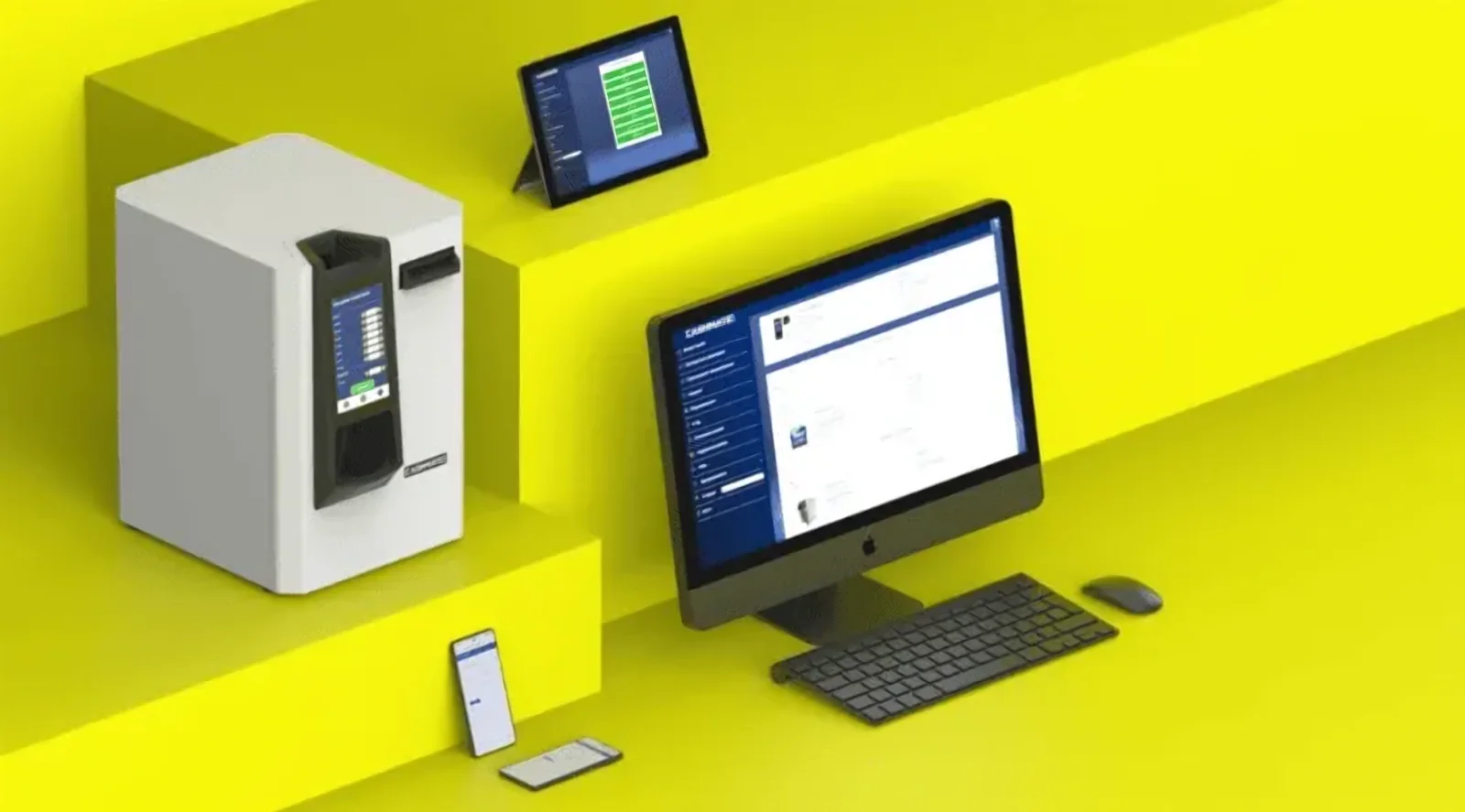
In practice, automated cash management means integrating a machine that can accept, validate, store and dispense cash automatically. The operator no longer touches the cash during the transaction, and the system takes over validating notes and coins, calculating change and recording the transaction.
This operational detail has a direct impact on the routine of the shop, restaurant or hotel. Dependence on manual processes is reduced and the way the till works is standardised, regardless of the shift, the employee’s experience or the number of customers at that moment.
The effect is visible on three fronts. The first is efficiency, because service becomes faster and more consistent. The second is security, because cash is protected and less exposed. The third is control, because the amounts recorded by the system allow stricter till management.
Where the return is most evident
This type of solution makes most sense in businesses with a regular flow of cash payments, a need for fast service and pressure on operational control. Not every operation has the same profile, so the return depends on the context.
In food service, for example, peak times make any delay in payment more visible. A manual process can cause queues, change errors and distractions for the team at a critical stage of service. With automation, staff focus on serving and delivering, while the system handles the cash.
In retail, the benefit usually shows in standardised till operations and reduced shrinkage. In shops where several people operate the same till, process consistency is especially relevant. Technology helps reduce till discrepancies and simplifies opening, top-up and closing tasks.
In hospitality, the picture depends on the service model. In properties with an automated reception or more digitalised check-in and payment flows, automated cash management can be part of a broader concept of guest autonomy that frees the team for higher-value tasks.
The logic is just as clear in self-service launderettes and other self-service formats. If the business aims to operate with less human intervention, cash cannot continue to be treated as a manual exception. Automation needs to be consistent throughout the experience.
Till security is not just a physical issue
When people talk about security, they often think only of theft or robbery. But the operational security of the till starts before that. It starts with controlling access to cash, automatic note validation, eliminating change errors and reducing staff’s direct exposure to cash.
An automated system helps limit physical contact with money and reduce opportunities for errors or theft. Cash is stored in the machine, transactions are recorded and the operation becomes more traceable. For managers, this means less reliance on manual checks and more confidence in the closing data.
There is also a less visible but important aspect. When the team is no longer responsible for counting, storing and checking cash throughout the shift, pressure on the workstation also eases. This tends to make service smoother and reduce internal conflicts over till discrepancies.
Automated cash management and the customer experience
Customers may not know the technology in detail, but they quickly notice the effect. Faster payment, exact change and an organised process inspire confidence. In high-turnover sectors, that perception counts.
In a restaurant, the difference between a queue that moves and a queue that stalls often lies in the moment of payment. In a shop, the till is one of the last points of contact with the brand. If there is delay, hesitation or error, the experience loses consistency. Automation helps protect that moment.
This does not mean technology replaces human service. In many cases, it does exactly the opposite. By removing mechanical tasks from the process, it allows the team to be more available to welcome customers, answer questions and sell better.
What to assess before implementing
The decision to invest in automated cash management should start with a simple analysis: where does the cost of the manual operation lie today? This cost does not always appear only on the payroll. It is often spread across wasted time, till discrepancies, shrinkage, rework and slow service.
It is also important to understand the role cash plays in the business. In some operations, cash payments still carry significant weight. In others, the volume is lower but enough to justify automation because of the risk and the need for control. The point is not just how many notes come in each day. It is how much effort the operation still devotes to handling them.
Integration is another decisive factor. The solution must fit the reality of the point of sale, the software in use and the company’s service approach. If the technology creates friction instead of simplifying things, the project loses value. That is why a consultative, sector-specific approach makes a difference.
It is also worth considering how quickly the team will adopt it. Good equipment matters, but implementation needs to be clear, practical and geared to the real context of the operation. When the solution is intuitive and solves concrete day-to-day problems, acceptance tends to be quick.
When it may not be the right priority
Not every company should go ahead straight away. If cash volume is minimal and the operation is already heavily geared towards electronic payments, the return may be slower. The same applies to very small businesses with low footfall and simple controls.
This does not mean the technology no longer makes sense. It simply means the priority may lie elsewhere in the process, such as customer service, self-service or channel integration. Automation should respond to a real need, not follow a trend.
On the other hand, fast-growing businesses should consider this decision early. As operational complexity increases, keeping manual till processes tends to create friction. Solving the problem after losses, queues or recurring failures appear usually costs more.
An operational decision, not just a technological one
Automated cash management should not be seen as a standalone machine on the counter. Its value lies in how it reorganises the payment process, strengthens control and creates the conditions for more efficient service.
For managers and decision-makers, the most useful question is not whether the technology is modern. It is whether the current till model still serves the operation with the level of security, speed and control the business requires. When the answer starts to be no, automation stops being optional and becomes a natural evolution.
In a market where operational efficiency weighs ever more heavily on profitability, simplifying cash handling is a pragmatic choice. And when the solution is well suited to the sector and the point of sale, the impact is quickly felt at the till, in the team and in the experience of everyone who comes in to pay.