
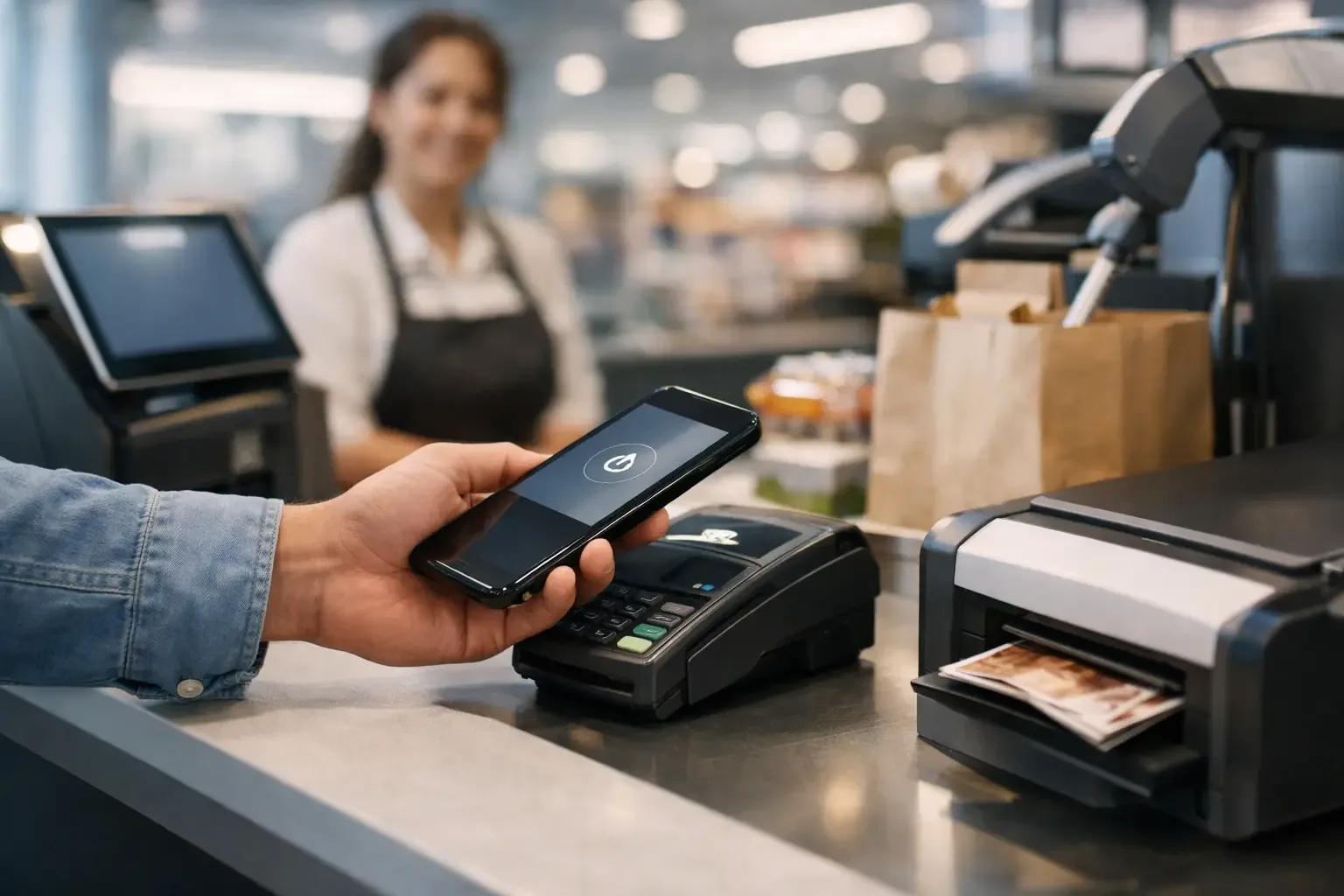
At a counter with queues, change to be checked and till closes prone to discrepancies, the problem is rarely just the number of customers. Often, it lies in the process. Automated payments in retail exist precisely to fix this critical point: reducing manual intervention, speeding up service and giving the operation more control.
For those who manage shops, retail chains or high-footfall points of sale, payment is no longer just the final step of the purchase. It is an area of operational risk and, at the same time, a clear efficiency opportunity. When the process relies too heavily on manual cash handling, visual checking of notes and coins or decentralised till management, hidden costs start to build up.
Why automated payments in retail have become more relevant
In retail, small inefficiencies repeated hundreds of times a day quickly turn into operational losses. A change error, a pause to check a note, a discrepancy at closing or a change of operator at peak time all have a direct impact on the pace of the shop and the customer experience.
Automated payment systems respond to this with a simple logic: take operational load off the team and transfer it to technology designed to control the process. This applies both to automated cash management solutions at a till and to self-service equipment that lets customers complete certain stages of the purchase or payment on their own.
The most visible gain is speed. But for management, the most important effects usually show in other indicators: less exposure to human error, greater traceability, stronger security and better control over cash flows.
What changes in practice in the shop
Automating payments is not just installing new equipment. It means reorganising a sensitive part of the operation so that service is more predictable and less dependent on repetitive tasks.
In a traditional scenario, the employee takes the payment, checks that the cash is genuine, calculates and hands over change, records the transaction and closes the till at the end of the shift. In an automated environment, much of this circuit is managed by a system that validates, stores and dispenses change in a controlled way.
This reduces direct handling of money and frees the team for tasks with greater commercial value, such as customer assistance, restocking, advice or managing the shop floor. In shops where service and attention at the point of contact make a difference, this operational change is especially relevant.
There is also a less visible but very important effect: standardising the process. With automation, payment no longer varies so much depending on each operator’s experience or speed. The operation becomes more consistent, which simplifies training, supervision and control.
Security, control and fewer errors
One of the strongest reasons to invest in automated payments in retail is security. Cash still carries weight in many commercial settings in Portugal, and this calls for more effective protection and control mechanisms.
When money no longer passes manually between employee, drawer and till, exposure to errors, shrinkage and inconsistencies is reduced. Automatic validation of notes and coins helps prevent invalid cash from being accepted. Controlled storage lowers the risk associated with frequent access to the till. And systematic recording of transactions makes auditing and reconciliation easier.
Even so, it is important to keep a realistic perspective. Automation does not eliminate every risk. What it does is significantly reduce vulnerable points and create a more controlled environment. For this to work, the solution must be well integrated into the shop’s flow and suited to the type of operation.
In a shop with a heavy cash component, the priority may be automated till management. In other contexts, it may make more sense to combine payment automation with self-checkout or kiosks that support service. The decision depends on the payment mix, available space, footfall and service model.
Where the return on investment lies
In projects of this kind, the return rarely comes from a single factor. It comes from the sum of several operational improvements that together make the shop more efficient.
Fewer change errors and till discrepancies are among the most immediate gains. Next come time savings in closing, checking and cash management tasks. At the same time, the shop is better able to keep service fast even at busy times, without proportionally increasing pressure on the team.
There is also an impact on staff management. When the payment process is simpler and better controlled, the learning curve tends to be shorter and the operational risk associated with staff turnover also falls. This does not replace training, but it reduces critical dependencies.
In multi-store operations, the benefit of standardisation carries even more weight. Head office gains greater visibility of procedures, anomalies and performance by point of sale. This kind of control is particularly useful for chains that want to grow without replicating inefficiencies.
Automated payments in retail and the customer experience
Not every innovation at the point of sale automatically improves the shopping experience. If technology complicates the process, creates separate queues or causes confusion, the effect can be the opposite of what was intended. That is why automation must be designed from an operational perspective and also with usability in mind.
When it is well implemented, the experience improves because payment becomes faster, clearer and less prone to interruptions. Customers notice better organisation, shorter waiting times and smoother service. In a market where convenience and speed influence loyalty, this detail counts.
Even so, there are contexts in which human presence remains central. In shops with assisted selling, higher-value items or a need for advice, automation should support staff, not replace them in the relationship with the customer. The goal is not to dehumanise the shop. It is to remove operational friction so that the team can be more available where it really makes a difference.
How to assess the right solution for your business
Choosing an automated payment solution requires more than comparing equipment. The starting point should be the shop’s real operation.
It is important to analyse how many transactions there are per day, the share of cash, where queues form, how much time is lost on till tasks and which errors are most frequent. You also need to assess the physical space, integration with existing systems and how the team works on the shop floor.
Different businesses need different answers. A high-turnover convenience store may need a compact system focused on speed at the counter. A higher-volume operation with several service points may benefit from a more integrated approach, with centralised control and greater cash management capacity.
This is where a specialised approach makes a difference. Rather than treating automation as a standalone product, it makes more sense to frame it as part of an operational transformation of the point of sale. This makes it possible to align technology, process and business objectives.
The future of retail lies in smarter operations
In the coming years, pressure on operating costs, staff availability and service quality will not ease. Retail will have to respond with models that are more controlled, more efficient and more adaptable.
Automated payments play a strategic role in this evolution because they act on a critical area of the business: the moment the sale is completed and the operation has to be fast, secure and reliable. It is not just about modernising the counter. It is about reducing friction, protecting revenue and giving the shop the capacity to operate better, every day.
For many companies, this step is no longer a question of an innovative image. It is an operational decision with a direct impact on productivity, security and consistency of service. And when the solution is well chosen and correctly implemented, the result shows where it matters most: in internal control, team performance and the experience of everyone who walks into the shop.
Retail still depends on execution. The simpler, more secure and more automated that execution is at the point of payment, the more room the business has to grow with less noise and more control.


