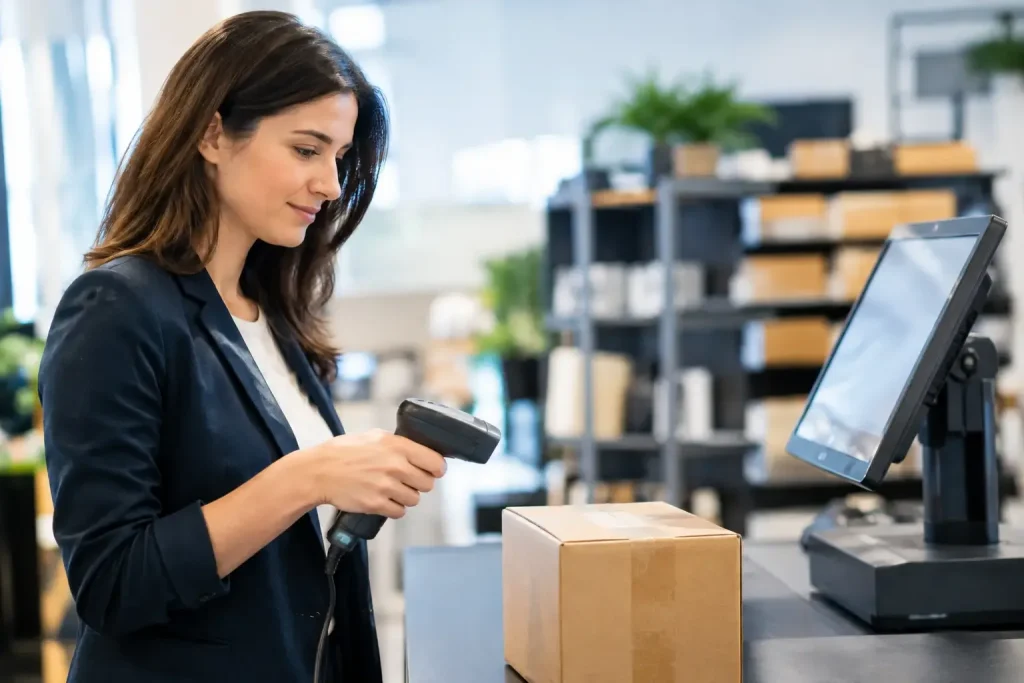
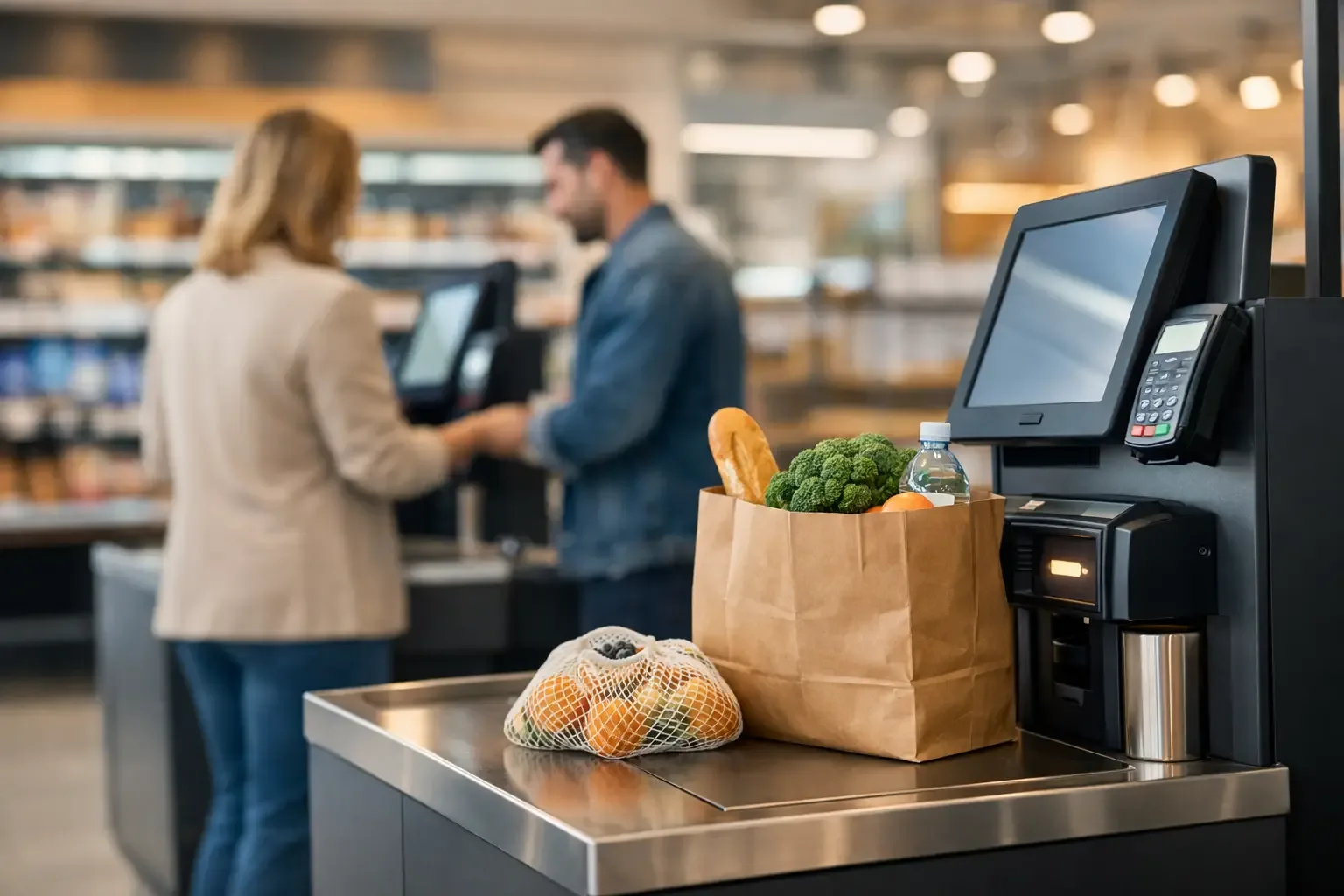
At a point of sale with queues at peak times, every second counts. In that context, self-checkout for shops stops being just a trend and becomes an operational decision: cutting waiting times, improving control at the till and freeing staff for tasks with greater commercial value.
The right question is not whether the technology looks modern. It is whether it makes sense for your service model, your customer profile and the real pace of your operation. In many shops the answer is clearly yes. In others, it depends on how the solution is implemented and integrated with the other payment processes.
What changes with self-checkout for shops
Self-checkout hands part of the purchase completion process to the customer while keeping control on the operation’s side. In practice, this means less reliance on a traditional till for simple transactions and more capacity to absorb demand peaks without a proportional rise in service costs.
In a retail environment, this change has a direct impact on three fronts. The first is the flow of the shop. When customers can pay independently, queues tend to spread out better and the perceived wait falls. The second is staff productivity, as the team is no longer entirely focused on repetitive payment tasks. The third is operational consistency, especially when the solution is linked to automated cash management and transaction control systems.
This does not mean human service disappears. Quite the opposite. The value of self-checkout often lies in letting staff be more present in customer support, restocking, organising the shop floor and supervising the operation, rather than being tied to the counter.
When it makes sense to invest
Not every shop gets the same benefit from this kind of solution. Payback tends to be faster in operations with high transaction volumes, simple average baskets and predictable busy periods. Convenience supermarkets, corner shops, outlets in busy urban areas and operations built around quick purchases are clear examples.
It also makes sense where it is hard to scale staffing in line with demand. When opening another traditional till means higher costs, more training and greater management complexity, self-checkout can be a more efficient response.
On the other hand, there are scenarios where the model needs a closer look. Shops with highly assisted sales, products that require constant technical advice or frequent validation processes may need a hybrid approach. In these cases, the best decision is not always to replace the traditional till but to complement it with well-placed self-service stations.
Operational benefits that justify the decision
The most visible argument is shorter queues, but the most important benefit usually lies in the structure of the operation. A well-designed self-checkout system helps standardise procedures, reduces handling errors and makes cashing up more predictable.
When it is integrated with automated cash solutions, the gain is even clearer. Cash no longer passes through as many hands, which reduces discrepancies, strengthens security and simplifies internal audits. For many managers, this point carries as much weight as the customer experience.
There is also a commercial effect worth considering. A shop with less friction at payment tends to improve the overall perception of its service. Customers may not remember the machine they used, but they easily remember coming in, buying and leaving without wasting time.
From a management point of view, automation also produces more consistent data on footfall, service times and use of payment stations. This insight helps adjust rotas, reorganise layouts and make decisions based on real demand patterns.
What to assess before implementing
The decision should not start with the equipment. It should start with the process. Before choosing a solution, it is worth analysing how many transactions per hour the shop handles, how many items go into each purchase, the share of cash and card payments, and when the longest queues build up.
The space available also matters. A badly placed self-checkout can create more bottlenecks than it removes. Customer flow, visibility for supervision and proximity to the exit are relevant operational factors. The design of the point of sale directly affects how effective the solution is.
Another critical point is integration. The system must communicate reliably with the management software, payment methods and, where applicable, automated cash handling equipment. Without this connection, automation is incomplete and some of the gains are lost in day-to-day operation.
Usability should not be underestimated. Customers need to understand the process quickly, with a clear screen and an intuitive sequence. The simpler the experience, the less staff need to step in and the higher the adoption rate.
Self-checkout for shops does not remove the need for supervision
There is a common idea that automating payment means taking people out of the operation. In practice, the most effective scenario is different. Self-checkout reduces manual and repetitive tasks, but still requires active supervision, occasional assistance and the ability to deal with exceptions.
Age-restricted products, specific checks, scanning errors and requests for help are part of everyday reality. The difference is that one member of staff can oversee several stations at once instead of being assigned to a single till. This increases productivity without compromising service.
For this model to work, staff training is decisive. Knowing how to operate the system is not enough. Staff need to know how to step in quickly, guide the customer and keep the shop moving. Technology handles an important part of the process, but the quality of the implementation still depends on operational management.
The impact on security and cash control
In retail, security is not just about loss prevention. It is also about reducing vulnerabilities in cash handling, limiting human error and ensuring transactions are traceable. This is where self-service solutions take on strategic weight.
When payment is structured with greater automation, cash exposure falls and control improves. Cashing up becomes simpler, discrepancies tend to drop and management gains more visibility over what happens at each payment station.
This is particularly relevant for businesses with rotating staff, extended opening hours or a high volume of cash transactions. In these scenarios, automation is not just about speeding up service. It is about protecting the operation.
How to choose the right model
The choice of system depends less on a general idea of innovation and more on how well it fits the type of shop. Some operations only need standalone stations for quick payments. Others benefit more from solutions integrated with automated cash management and assisted support. There are also settings where it makes sense to combine traditional tills, self-checkout and service kiosks, creating different purchase journeys.
A consultative approach makes all the difference here. Rather than adopting technology indiscriminately, the most effective route is to assess the business vertical, the constraints of the point of sale and the operation’s specific goals. This analysis makes it possible to implement a tailored solution with measurable impact from the first few months.
It is this alignment between technology and process that turns the investment into operational results. Companies such as SelfPay approach this subject with a focus on sector specialisation, which is particularly relevant for businesses that are not just looking for equipment but for a solution adapted to the way they serve customers, take payments and run the point of sale.
Will customers accept this model?
In most cases, yes, as long as the experience is simple. Portuguese customers are increasingly used to self-service interactions for payments, check-in and convenience services. Even so, acceptance varies with the context, age group and type of purchase.
The mistake is to assume the technology will catch on by itself. When the interface is confusing, when there is no initial support or when the process adds unnecessary steps, resistance grows. When the system is clear and the benefit is immediate, adoption happens naturally.
That is why implementation should be seen as a supported operational change, not just the installation of equipment. In-store communication, staff presence in the first few days and adjustments based on customer behaviour help consolidate the new model.
Self-checkout for shops is worth it when it addresses a real operational problem and not just a wish to modernise. If your business needs to cut queues, improve control and gain efficiency in customer service, automating payment can be one of the most practical decisions for growing more consistently.