A late arrival, a queue after breakfast or a reception with just one member of staff can shape the first impression of a stay. This is where the comparison between self check-in vs reception stops being purely technological: it becomes a decision about operations, service and profitability for each property.
Self check-in does not necessarily eliminate the traditional reception. In many hotels, hostels, holiday rentals and aparthotels, it creates a more flexible model, able to ensure availability outside peak hours and to free the team for higher-value tasks. The best choice depends on the type of guest, the size of the property, the volume of arrivals and the experience you want to offer.
Self check-in vs reception: what changes in the operation
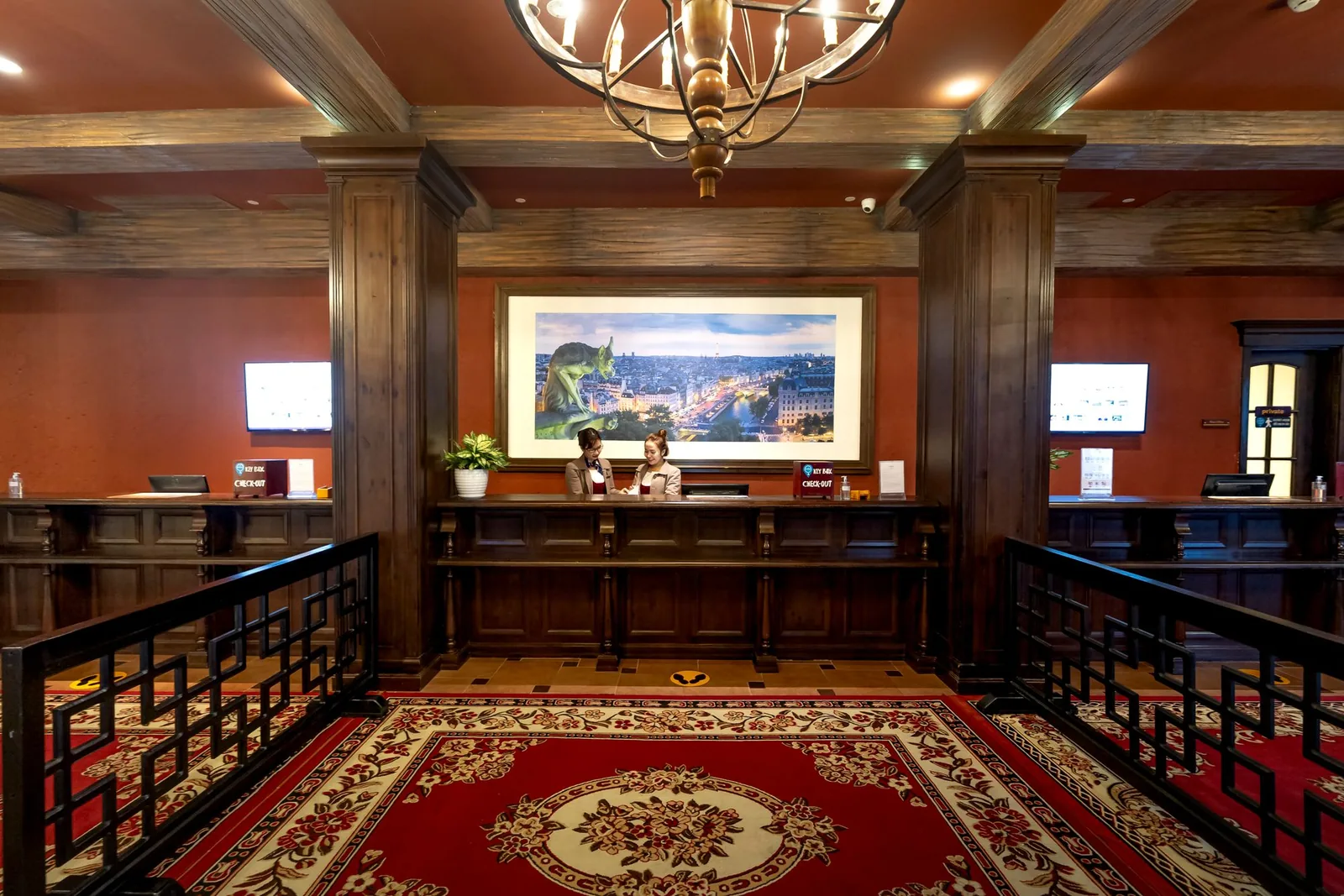
At a conventional reception, the arrival process depends on a member of staff being present. They confirm the booking, collect details, check documents, take payment where applicable, hand over the key or access card and answer questions. It is a personal service, but also a process subject to opening hours, workload and fluctuations in demand.
With a self check-in system, guests use a kiosk to find their booking, enter or confirm their details, pay, receive their key or card and, with certain models, complete mandatory guest registration. The process is guided by on-screen instructions and can be available 24 hours a day.
The difference is not just who carries out each step. It lies in the ability to standardise procedures, reduce waiting times and keep the operation running when the team is not physically at reception. For a property with arrivals spread throughout the day and night, this availability can have a direct impact on the guest experience and internal organisation.
When the traditional reception still makes sense
A staffed reception still has an important role, especially in properties where personalised service is central to the value proposition. Upscale hotels, properties with a strong concierge component or accommodation that welcomes international guests with more complex needs benefit from a team available to guide the stay from the very first moment.
There are also situations where human intervention is decisive: last-minute changes, special requests, group bookings, accessibility issues or guests unfamiliar with digital solutions. An experienced receptionist can read the situation and handle exceptions with a sensitivity that an automated flow alone cannot replace.
However, keeping a reception permanently staffed means fixed costs, shift planning and dependence on staff availability. In small or seasonal properties, ensuring 24/7 cover can be an operational burden that is hard to justify. Even in larger properties, there are periods when administrative work absorbs resources that could be devoted to welcoming guests and dealing with important matters.
Practical advantages of self check-in
The main advantage is continuity of service. Guests arriving later than planned do not need to wait for a member of staff, call an emergency number or follow manual instructions to collect a key. They can complete the process independently, within a flow defined by the property.
This solution also eases pressure at the busiest times. When several guests arrive at once, a check-in kiosk can absorb part of the volume while the reception team assists guests who need help or deals with other priorities. Instead of a single queue relying on one desk, the property gains greater service capacity.
Standardisation is another concrete benefit. The system asks for the same details, presents the same information and applies the same sequence to every booking. This reduces data-entry errors, minimises inconsistent procedures between shifts and makes the arrival process easier to control. When integrated with the right systems, it also keeps records up to date and simplifies arrivals management.
For multi-site operations, holiday apartments or hotels with limited reception hours, automation can be especially relevant. It does not meet every service need, but it ensures that arrival no longer depends solely on a member of staff being physically present.
Payment and data collection in the same flow
Check-in is not just handing over keys. Many operations need to confirm payments, collect identification details, issue documentation or ensure acceptance of specific terms. When these steps are spread across different tools or depend on manual procedures, the opportunities for error and the time needed to complete each arrival increase.
A well-configured kiosk brings these interactions together in a single point. Guests follow clear instructions, use the payment methods offered by the property and receive confirmation of the transaction. For managers, the value lies in control: less manually transcribed information, more consistent service and a more organised view of the exceptions that require human follow-up.
The limits of the self-service model
Automating does not mean installing a machine and no longer managing reception. The success of self check-in depends on integration with the property management software, correct configuration of access methods, the quality of the on-screen instructions and the availability of support when something does not go as planned.
The guest experience must be simple from the moment of booking. If the property says the process is self-service but does not explain times, required documents, booking codes or accepted payment methods, the kiosk can turn a quick arrival into a source of frustration. Prior communication is part of the solution, not an afterthought.
It is also essential to plan for exceptions. A booking that does not appear in the system, a declined payment card, an illegible document or a failed key issue all require a response plan. This support can be provided in person at certain times or through remote assistance, depending on the property’s operating model.
Finally, automation should respect the brand’s positioning. An intimate guesthouse may prefer to keep a personal welcome at the busiest times and use the kiosk only for late arrivals. A city hotel geared towards short stays, on the other hand, may make self check-in the main option. There is no universal formula.
The hybrid model is often the most efficient
For many properties, the answer to self check-in vs reception is not to choose one and exclude the other. It is to distribute tasks better between technology and team. The kiosk handles repetitive, predictable operations; reception focuses on welcoming guests, assistance and situations that require skilled intervention.
This model maintains a human experience without forcing the team to repeat administrative tasks at every check-in. Staff can spend more time recommending services, handling special requests, helping foreign guests or following up on operational issues. At the same time, guests who value speed are free to complete their arrival at their own pace.
This approach is particularly effective in hotels with clear demand peaks. In the afternoon, the kiosk cuts queues and speeds up arrivals. At night, it handles arrivals outside reception hours. At quieter times, the team still has the capacity to provide a personal service without being tied to registration tasks.
How to assess the investment for your property
Before choosing a solution, it is important to analyse concrete operational data. How many check-ins take place outside normal hours? When do queues form? How much time does the team spend each day on repetitive arrival and payment tasks? How many incidents result from incomplete details, outstanding payments or keys handed over outside the normal process?
The assessment should also consider the guest profile. Business travellers, guests used to digital processes and visitors on short stays tend to value speed and autonomy. Families, groups or guests looking for a more attentive experience may need more support. Technology should serve that profile, not force guests to adapt to a poorly designed process.
It is equally important to look at implementation. A self check-in solution should be chosen for its fit with existing software, payment methods, identification requirements and the property’s access systems. Equipment such as the Roommatik systems, supplied by SelfPay Portugal, makes it possible to structure this type of operation with a focus on hospitality and a more autonomous arrival process.
The most productive decision is not to ask whether technology replaces people. It is to define where the team’s presence creates most value for guests and where automation can guarantee speed, availability and control. When that split is well planned, reception stops being a bottleneck and becomes a true service space.