
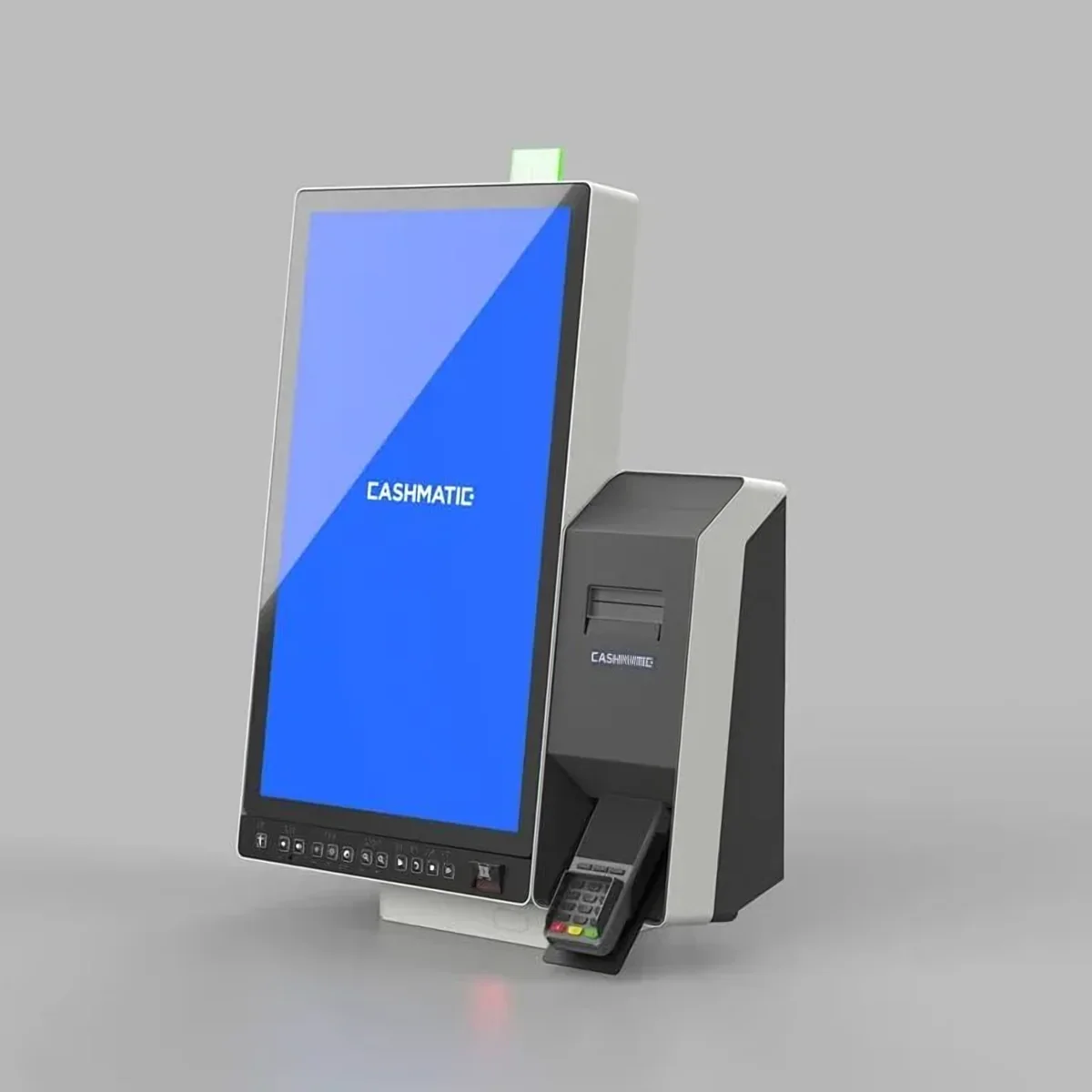
In a restaurant with intense peak hours, few problems weigh as heavily as queues, order errors and constant pressure on counter staff. It is in this context that a self-service restaurant kiosk stops being just a modern piece of equipment and becomes a tool for operational efficiency, with a direct impact on service, control and profitability.
Even so, the decision should not be made on impulse. Not every restaurant concept benefits in the same way, and not every space has the same needs. The value of the kiosk lies less in the technology itself and more in how it fits into the service flow, the customer profile and the business’s objectives.
What changes with a self-service restaurant kiosk
The main effect of a self-service restaurant kiosk is simple: it moves part of the ordering and payment process to an automated point, reducing reliance on the traditional counter. In practice, this shortens waiting times in many scenarios, eases the load on staff at peak times and creates a more consistent process.
When customers place their order directly on the screen, there is less noise in the communication. There are fewer misunderstandings, fewer repeated requests at the counter and fewer errors when information is passed to the kitchen. In operations with configurable menus, extras, meal deals or limited-time promotions, this detail carries real weight day to day.
There is also an often underestimated commercial advantage. A kiosk can present additional suggestions in a structured, automatic way, something hard to guarantee with the same rigour in face-to-face service, especially when staff are under pressure. Upselling no longer depends solely on each employee’s initiative.
Where a kiosk makes most sense
Not all restaurants have the same service pattern. In quick-service formats, food courts, grab-and-go concepts, high-volume cafés and venues in urban or tourist areas, automation tends to deliver more immediate gains. Customers already expect speed, autonomy and clear processes.
In these formats, the kiosk reduces visible queues, improves throughput and helps absorb peaks without a proportional increase in front-of-house staff. For operations that struggle to recruit or retain staff, this is especially relevant.
In restaurants built more around the personal experience, table service or a premium positioning, the analysis should be more careful. A kiosk may still make sense, but perhaps not as the main channel. It may work better as a complement, for example for quick orders, takeaway, hotel breakfasts or specific high-traffic areas.
Operational benefits that justify the investment
Adopting a self-service restaurant kiosk is usually judged on speed of service, but that is only one of the gains. For an operations manager, the real interest lies in the cumulative effect on several indicators.
The first is efficiency at the point of sale. Fewer repetitive interactions at the counter free staff for higher-value tasks such as customer support, organising production or managing the space. Automation does not remove the importance of people: it repositions them where they make the most difference.
The second is control. A digital flow standardises how orders are taken, limits ambiguity and improves traceability. This reduces rework, returns and friction in the operation. When the system is properly integrated with payments and production, the whole cycle becomes more predictable.
The third is commercial consistency. Promotions, menus, suggestions and configuration rules are presented in the same way to every customer. This is especially useful for chains, franchises or operations that need uniformity across outlets.
There is also a significant financial dimension: reducing the hidden cost of errors. A wrongly entered order, an omission, an extra that is not charged or a mix-up in the kitchen all affect the bottom line, even when they seem like one-offs. At volume, these losses add up.
The role of payment in the self-service experience
Talking about kiosks without talking about payment means looking at only half the process. In a well-designed operation, ordering and payment should work as one continuous, simple and secure flow. Whenever there is friction at this stage, the perception of speed disappears.
The choice of solution should therefore consider the payment methods accepted, transaction speed, the clarity of the interface and integration with the rest of the operational ecosystem. Cards, contactless, digital references or other payment methods relevant to the target audience should be reliably supported.
In businesses that also handle cash, automation should be planned as a whole. In many cases, it makes sense to combine kiosks with automated cash management solutions elsewhere in the operation, strengthening security and control over physical cash. This is where a sector-specialist approach tends to make a difference, because it avoids isolated decisions that later create friction on the ground.
Self-service restaurant kiosk: what to assess before going ahead
The right technology for one restaurant may be wrong for another. Before investing, it is important to analyse how the operation is designed with some rigour.
Available space is one of the first factors. A kiosk has to fit into the natural flow of customers without creating bottlenecks at the entrance, the collection point or the counter. Poor physical placement undermines uptake, however good the equipment.
It is also essential to understand customer behaviour. If most customers want speed and autonomy, adoption tends to come naturally. If the audience places a high value on human interaction or is less familiar with digital interfaces, it may be necessary to keep more visible assistance or introduce the solution gradually.
Another decisive point is the menu. The clearer and better organised the offer, the better the kiosk will work. Confusing menus, poorly structured categories or unintuitive options harm the experience and increase drop-offs. Implementing self-service often means rethinking the commercial structure of the menu, and that is a good thing.
Technical integration also deserves attention. The kiosk should communicate with the invoicing system, order management and, ideally, the other operational components. Without that alignment, the efficiency gain falls short of expectations.
The most common mistake: buying equipment instead of redesigning the process
Many projects fail because they treat the kiosk as an isolated piece. The equipment is installed, the software is switched on and results are expected to appear by themselves. It rarely works like that.
A self-service restaurant kiosk delivers better results when it is part of a broader operational logic. That means reviewing queues, signage, how collection is organised, staff training, preparation times and customer support rules. Technology improves the process, but it does not fix a poorly structured operation.
It is also wise to set concrete objectives from the start. Reduce average service time? Increase average spend? Cut order errors? Improve performance at peak times? Without clear metrics, it is hard to assess the return and fine-tune the implementation.
The impact on staff and the customer experience
There is sometimes a perception that self-service distances customers from the restaurant. In practice, the effect depends on execution. When the process is intuitive, fast and well supported, many customers value the autonomy. They feel more in control of their order, under less pressure when choosing and more certain about payment.
For staff, the benefit is not just about “spending less time on the counter”. It is about reducing mechanical, repetitive tasks and freeing up time for support, handling exceptions and service quality. Instead of absorbing queues, the team can focus on the operation and on the customers who really need help.
This does not remove the human factor. On the contrary, it makes it more relevant where it adds value. In restaurants, the best automation does not replace service: it organises it.
An operational decision, not just a technological one
Adopting a kiosk is not about following a trend. It is a decision about productivity, control and responsiveness in a market where speed and consistency matter more and more. For many businesses, especially high-volume ones, the return comes from the sum of small daily gains that stop being the exception and become part of the model.
When the solution is chosen according to the sector, customer flow and operational goal, the investment becomes more solid. That practical reading is what separates an interesting piece of equipment from a useful transformation. For those running restaurants with a focus on efficiency, the right kiosk is not just about modernising the space. It gives growth more structure, with less friction in service and more control over the operation.


