
When staff lose time counting change, correcting cash discrepancies or confirming cash payments, the problem is not just in the closing process. It runs through the whole operation. That is exactly where the advantages of an automatic cash changer begin: less manual intervention, more control and a more stable point of sale throughout the day.
For businesses with in-person service, cash still carries real weight. Restaurants, retail, self-service laundrettes and many other public-facing services still handle coins and notes every day, often at times of high pressure. In these scenarios, automating cash management is not a cosmetic upgrade. It is an operational decision with a direct impact on productivity, security and the customer experience.
What changes with an automatic cash changer
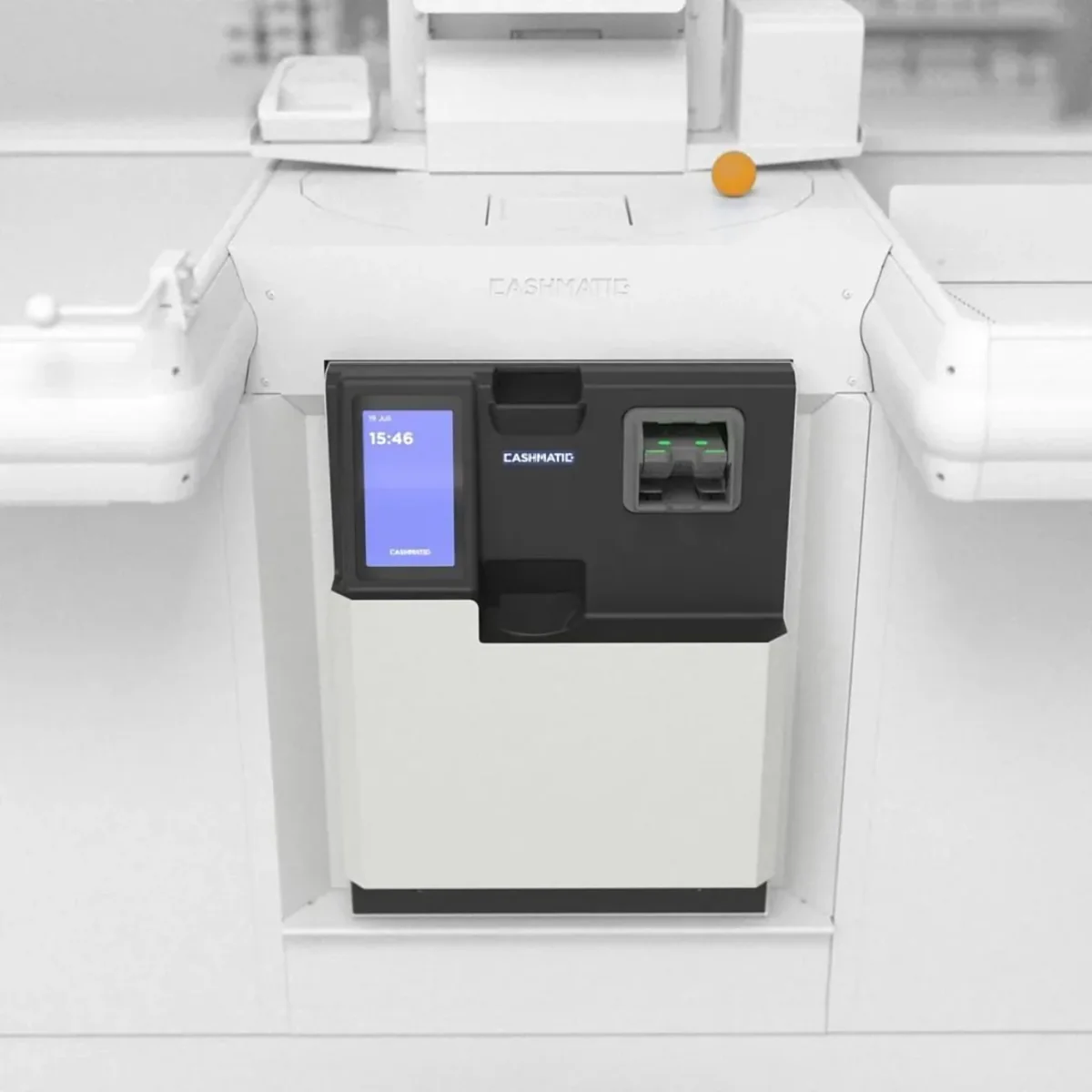
An automatic cash changer accepts, validates, stores and dispenses change without staff having to handle money. In practice, the operator records the sale and the machine deals with the cash. This detail fundamentally changes the till routine.
The first effect is a standardised process. Instead of depending on the attention, experience or speed of each member of staff, payment follows a controlled, repeatable logic. In a high-turnover restaurant, for example, this reduces pressure at the counter. In a retail shop, it helps maintain consistency between shifts. In a self-service laundrette, it simplifies coin acceptance and reduces the need for intervention.
There is also a gain in predictability. When change is managed automatically, the business is far less exposed to small accumulated errors that, by the end of the day, turn into losses or time wasted tracking down discrepancies.
Advantages of an automatic cash changer in daily operations
The main advantage is fewer cash-handling errors. Wrong change, miscounted notes, mistakes at peak times and discrepancies between the physical till and recorded sales are common problems in manual operations. With automation, these incidents fall very significantly.
Fewer errors means time recovered. Staff are no longer focused on repetitive tasks and can devote more attention to customers, restocking, service or keeping the premises organised. For an operations manager, this means a more efficient point of sale without an immediate need for extra resources.
Another advantage of an automatic cash changer is control. Cash no longer passes from hand to hand and is protected inside the machine. This reduces the risk of loss, internal theft, unauthorised access and errors that are hard to trace. It also simplifies internal audits and makes till checks easier.
Closing a shift also becomes faster and more reliable. Instead of counting coins and notes by hand, the information is organised by the system, so the till can be closed more quickly and with less room for doubt. In operations with several shifts, this consistency is very valuable.
Till security and risk reduction
Security is one of the strongest arguments for adopting this type of solution. The less direct contact there is with cash, the lower the operation’s exposure to failures and incidents. This applies to both internal and external risk.
In a traditional setting, cash is often moved between drawers, bags, safes and the hands of several staff members. Each of these handovers creates a vulnerability. With an automatic cash changer, the cash journey is more closed and controlled.
This is especially relevant for businesses with a large volume of cash payments or large teams. Automation reduces reliance on manual control procedures, which are not always followed in the same way. At the same time, it protects staff from sensitive situations involving till checks and responsibility for discrepancies.
It is still important to be realistic. The machine does not replace internal security policies, nor does it solve every operational risk on its own. The best result comes when the technology is part of a well-defined process, with clear rules on access, collection and supervision.
Impact on the customer experience
An automatic cash changer is not always associated with the customer experience, but the link is there. Faster, more accurate payment reduces queues, avoids disputes over change and conveys an image of organisation.
In sectors such as fast food or city-centre retail, seconds count. When service is under pressure, any delay at the till affects how the service is perceived. If change is automatic, staff can stay focused on the customer instead of splitting their attention between screen, drawer and coins.
There is also a trust effect. Customers see that the amount received and the change given follow an automatic logic, which removes doubt. This detail may seem small, but it contributes to a smoother, more professional experience.
Where cash is still widely used, automation helps modernise the point of sale without removing payment methods that remain relevant to part of the public.
Where the return is most evident
The return tends to be clearest in operations with volume, repetition and a need for control. Restaurants, bakeries, butchers, mini-markets, convenience stores and other formats with a steady flow of customers quickly feel the impact of till automation.
In hospitality, the benefit may appear in specific reception or ancillary service settings, depending on the operating model. In self-service laundrettes, automating payment improves the autonomy of the premises and reduces the need for frequent intervention. In retail, especially in high-turnover shops with shift-based teams, the gain lies in control and simpler cash management.
This does not mean the solution makes sense in every context. A business with low cash volumes or highly consultative service may see a less immediate return. The decision should therefore be based on the real payment flow, the cost of operational errors and the time currently spent on manual cash management.
More efficiency, with the right implementation
Adopting an automatic cash changer is not just about installing equipment. It means adapting the payment process to how the business really works. The position of the machine, integration with the point of sale, staff training and the routine for loading and collecting cash all directly affect the result.
When the implementation is well planned, the transition is simple and staff tend to embrace it quickly. That is because the operational benefit is visible every day. Less stress at peak times, less time cashing up and fewer disputes over discrepancies are gains the operation recognises immediately.
On the other hand, if the solution is chosen without considering the sector, transaction volume or layout of the premises, its potential is limited. That is why a specialist approach makes a difference. Not every operation has the same requirements, and a system tailored to the business delivers better results than a generic answer.
Advantages of an automatic cash changer beyond the till
There is one benefit that often only becomes clear after implementation: the quality of management. With more reliable cash control, the manager gains a clearer view of what is happening at the point of sale. This makes it easier to decide on staffing, opening hours, procedures and the need for extra support.
Automation also helps create a more disciplined operating environment. When the process depends less on individual habits, standards become easier to maintain. For growing companies, with several sites or a need to replicate procedures, this consistency is particularly valuable.
This is where technology stops being just a support device and becomes a tool for organising the operation. Specialist companies such as SelfPay work precisely on this basis: not just supplying hardware, but fitting the right solution into the right context.
The decision to automate cash handling should be seen as part of a broader strategy for efficient customer service. If your business deals daily with change, cash discrepancies, pressure at the counter and a need for greater control, it is worth looking at an automatic cash changer not as an extra cost but as a practical tool for operating better, more securely and with less waste.