
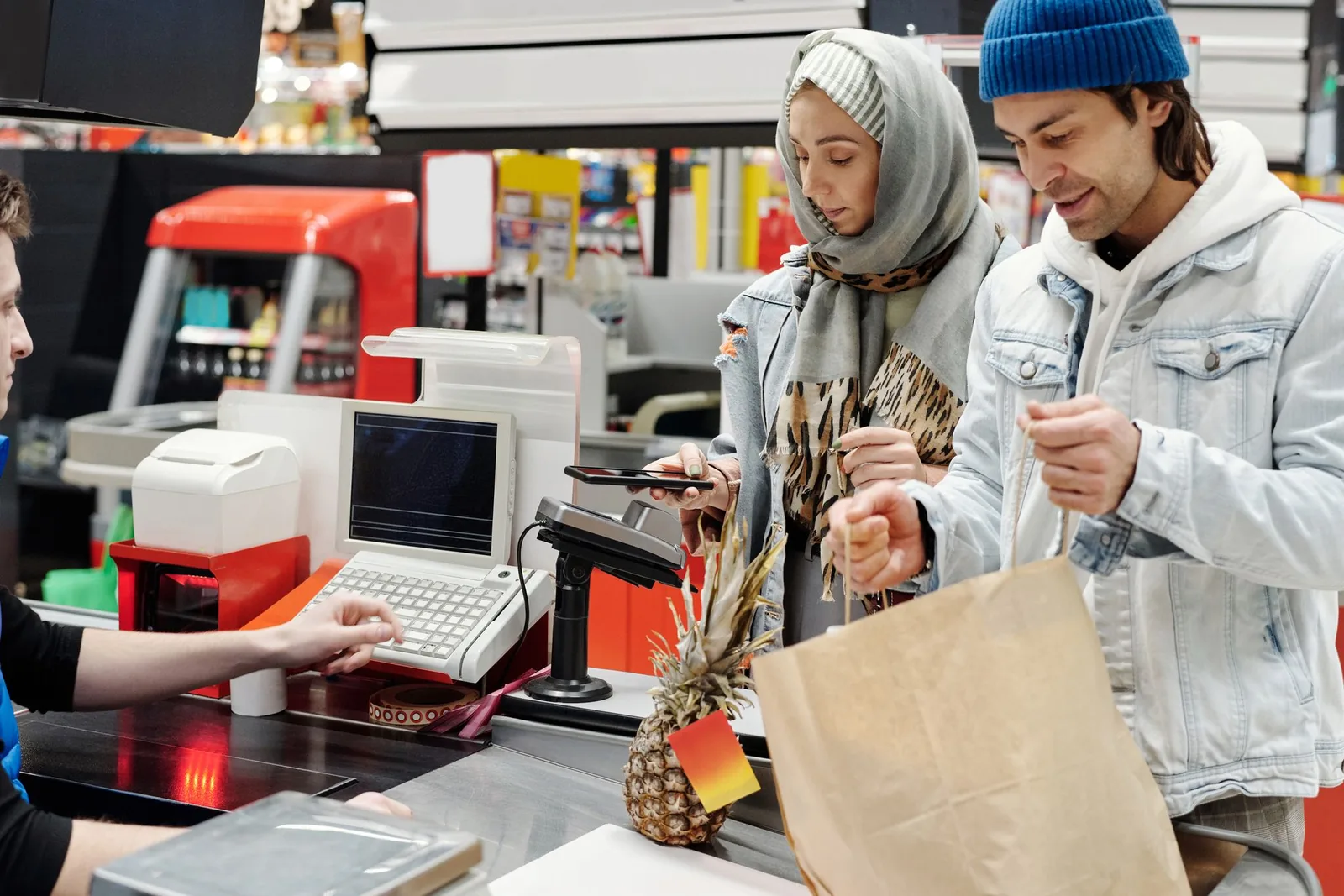
When things get busy, the difference between an efficient payment process and a point of friction shows within minutes: shorter queues, fewer change errors, less staff time tied up at the till. It is in this context that the question of Cashmatic or a traditional till stops being purely technological and becomes operational. For many businesses in Portugal, the decision has a direct impact on productivity, security and the ability to scale service without adding complexity.
The choice should not be driven by trends or sales pressure. It should be based on the type of operation, the volume of cash, staff turnover and the level of control the business needs at the point of sale. In some settings, the traditional till still does the job. In others, automation solves problems that the manual model tends to repeat every day.
Cashmatic or a traditional till: the real difference on the ground
At first glance, both models are used to accept cash payments and complete sales. In practice, however, they work very differently.
With a traditional till, a member of staff receives the money, checks the amount, calculates or confirms the change, puts the notes and coins away and cashes up at the end of the shift. It is a familiar process, simple to implement and with a lower initial investment. The problem is that it relies heavily on human attention in every transaction.
With a Cashmatic system, cash is handled automatically. The operator records the sale, the customer inserts the cash into the machine and the system validates it, stores it and dispenses the exact change. Staff no longer handle money directly. This change may seem small, but it shifts several operational indicators at once: it reduces errors, strengthens security, simplifies audits and frees up time for service.
The decision, then, is not just between two pieces of equipment. It is a choice between a process that depends on manual intervention and an automated process with greater control.
Where the traditional till still makes sense
Not every business needs to automate straight away. A traditional till can remain suitable for operations with a low volume of transactions, very stable teams and little cash in circulation. If the number of cash payments is low and operational risk is under control, the urgency to change will naturally be lower.
It can also make sense for very small businesses in their early stages that prefer a more modest investment at launch. In these cases, the priority may lie in other areas of the operation.
Even so, it is worth assessing the total cost of the manual model. A traditional till looks cheaper when you only consider the purchase, but that calculation usually ignores losses from change errors, till discrepancies, supervision time, lengthy reconciliations and greater exposure to shrinkage. Cheap up front is not always the most efficient over time.
Where automation has a clear advantage
The advantage of a Cashmatic system becomes clear in operations with volume, pressure on service and a need for strict control. Restaurants, retail, hospitality, self-service launderettes and other environments with frequent payments benefit from automation more quickly.
In restaurants, for example, the speed of settling the bill has a direct impact on the customer experience and table turnover. When staff do not need to count coins, check notes or correct change, they can stay focused on service. In retail, the effect is similar: less time per transaction and less room for error at peak times.
In hospitality and in operations with automated reception or check-in, the benefit goes beyond payment. Automation becomes part of a broader approach to modernising service, with fewer manual tasks and greater process consistency.
Security: one of the least discussed and most critical points
Many decision-makers start this analysis with cost, but security should come into the equation earlier. With a traditional till, money passes through staff’s hands, remains accessible in the drawer and requires frequent opening, counting and closing. Each of these steps adds risk.
With Cashmatic, cash is stored securely and the operator no longer has direct contact with it. This reduces exposure to internal theft, intentional or unintentional errors and disputes over change. It also creates a more controlled working environment, especially in businesses with several shifts or high staff turnover.
Traceability also improves. When the process is automatic, it becomes easier to identify discrepancies, confirm amounts and remove grey areas in till management. For anyone managing several points of sale, this level of control is particularly relevant.
Operational efficiency and staff time
A useful question is not just “how much does it cost?”, but “how much time are we spending on the current process?”. In many businesses, manual cash handling takes up more hours than it seems. Time goes on giving change, checking, cashing up, resolving differences and supervision.
Automation reduces this hidden drain. Staff can focus on the customer and the operation, instead of being tied to repetitive till tasks. This affects productivity, but also training. Training a team to operate an automated system and follow a standard process tends to be simpler than relying on each operator’s individual experience in handling money.
For operations managers, this predictability is valuable. More uniform processes mean less variation between shifts, less dependence on specific people and easier control.
Cashmatic or a traditional till: the cost is not just the purchase
It is natural for the initial investment to weigh on the decision. An automated system requires a greater commitment than a traditional till. But a serious comparison should not stop at the purchase invoice.
In the traditional model, there are scattered costs that rarely appear on a single line: till errors, losses, admin time, the need for more supervision, vulnerability to shrinkage and the impact on customer service. When these factors build up over months, the real cost rises.
In the Cashmatic model, the return tends to come from reducing these inefficiencies. It is not the same for every business: it depends on the volume of cash, the number of service points, the team structure and how sensitive the operation is to queues and errors. But in environments with a regular flow of cash, the effect is usually measurable.
So the right question is not just whether the system costs more. It is whether the current process is already costing too much without anyone accounting for it.
The impact on the customer experience
Customers do not always recognise the technology by name, but they notice the result. They notice when payment is quick, when there is no hesitation over change and when staff are focused on serving rather than counting coins.
In a market where the in-person experience still influences loyalty, that detail matters. In urban, commercial or tourist areas, where expectations of speed are higher, any delay at the till affects how the service is perceived.
Automation helps make the moment of payment smoother and more consistent. It does not replace good service, but it removes a classic point of friction. For busy operations, that is a practical advantage, not just a cosmetic one.
How to decide for your business
The best choice depends on the context. If your operation takes little cash, has low staff turnover and feels no pressure at cash-up, the traditional solution may still be enough. But if there are recurring till discrepancies, excessive time spent on reconciliations, queues at peak times or security concerns, automation deserves serious consideration.
It is worth looking at five variables: volume of cash payments, number of operators per shift, frequency of errors or discrepancies, time spent cashing up and the impact of payment on the customer experience. When these indicators show friction, the problem is no longer occasional: it is structural.
This is where a specialist approach makes a difference. More than selling equipment, it is important to assess how well the solution fits the reality of the business, its sector and its operational goals. SelfPay works precisely on this basis: automating payment as part of a practical transformation of the point of sale, with a focus on control, security and efficiency.
The decision between Cashmatic and a traditional till is not settled by a generic preference for technology or for conventional methods. It is settled by measuring the cost of manual complexity and understanding how much control the operation needs to gain. In many businesses, the change starts at the till, but the benefit is felt across the whole operation.