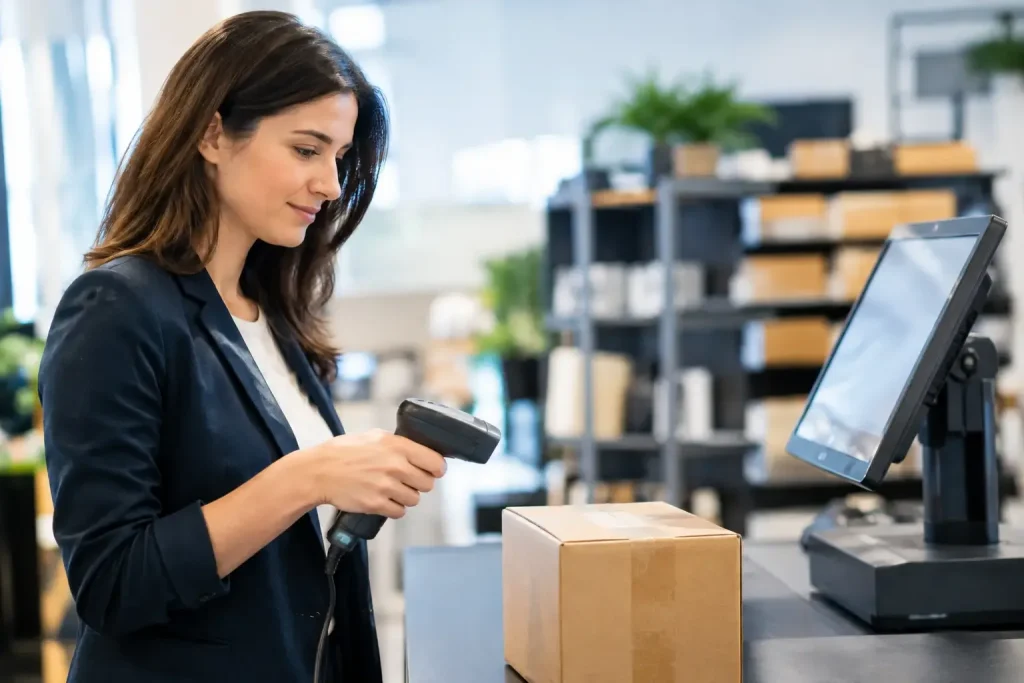
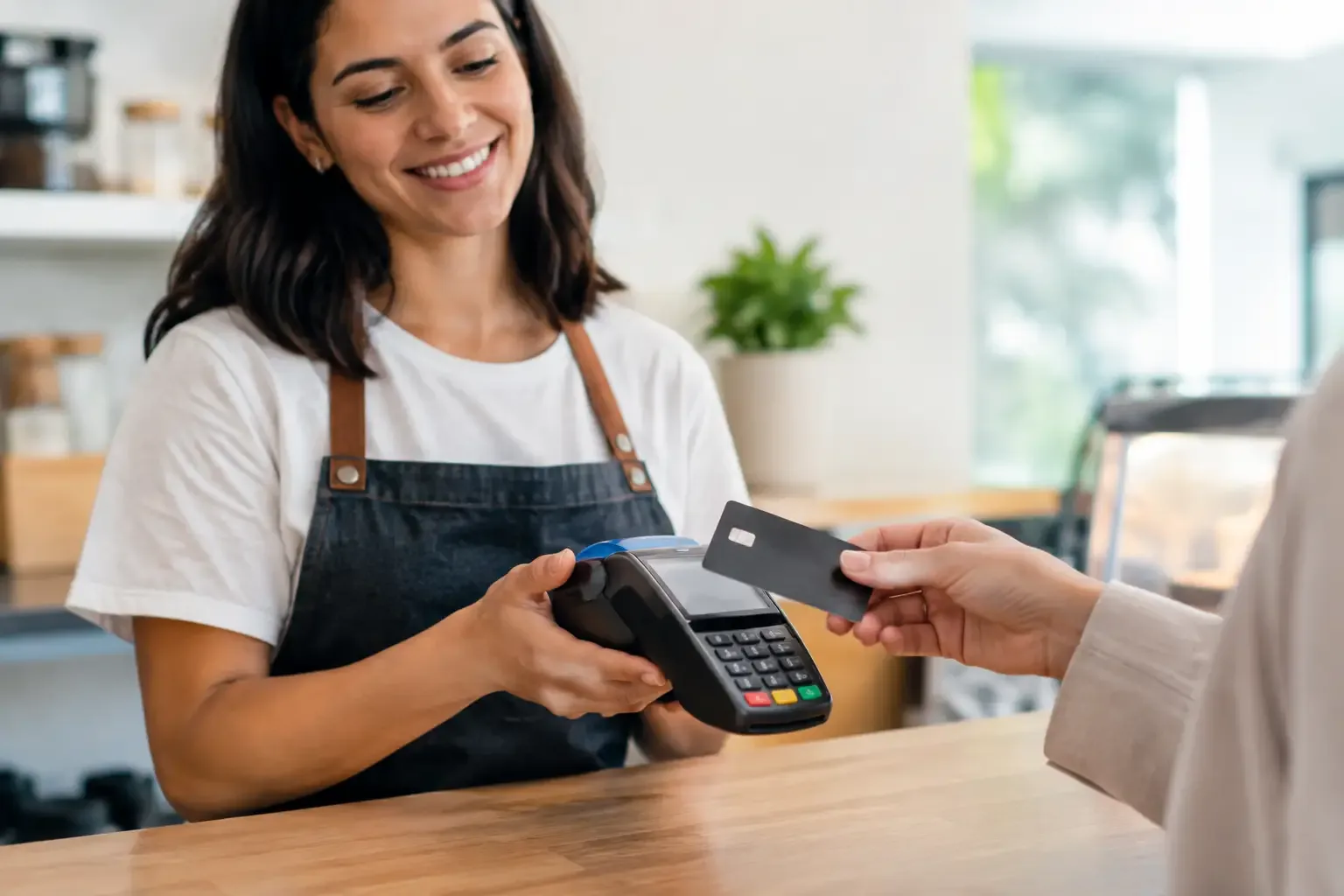
In a restaurant with peak hours, a shop with a steady stream of payments or a laundrette without permanent staff, choosing an integrated terminal is not just a technology decision. It is a decision about how much time the team loses at the till, control over the money coming in, speed of service and the ability to keep the operation running without avoidable failures.
An integrated terminal connects the payment process to the point-of-sale software, the automated till or the self-service equipment. Instead of the operator keying the amount into the payment terminal manually, the amount is sent by the system. This integration removes steps, limits human error and makes daily reconciliation simpler.
But not every business needs the same configuration. The right choice depends on customer flow, the payment methods accepted, the software already in use and, above all, the operational problems you want to solve.
How to choose an integrated terminal wisely
The first step is to see the payment point as part of a complete process, not as a stand-alone device. A terminal may accept cards and contactless payments, but it will have little impact if it forces tasks to be duplicated, creates queues or makes closing the till harder.
Start by identifying where friction exists. Are there frequent errors when entering amounts? Does the team take too long to complete each sale? Are there till discrepancies that are hard to trace? Are customers asking for faster or self-service payment? The answers help determine whether the terminal should be integrated into a traditional POS, an automated cash management solution or a self-service kiosk.
It is also important to distinguish a one-off need from a structural one. A small business with a low volume of transactions may benefit from a simple integration. A quick-service restaurant, a retail chain or a busy hotel, on the other hand, needs a solution built for peak usage, multiple stations and centralised control.
Compatibility with management software
Compatibility is one of the most important criteria. Before buying any terminal, check that it communicates directly with the invoicing or POS software used in the business. A true integration allows the amount to be sent automatically for payment and the transaction status to be returned to the system.
This avoids a common situation: the sale is recorded in the POS, but the operator has to enter the amount again on the terminal. As well as slowing service, this creates room for slips, incorrect amounts and differences between the sales report and the payments received.
The analysis should include the features needed day to day. For example, you may need to cancel a transaction from the POS, issue receipts, accept part payment, split the bill or link the payment to a specific table, room or service. Do not assume these functions are available by default. They should be validated in the proposed configuration.
Payment methods and customer experience
Customers expect to pay without obstacles. Chip cards, contactless, digital wallets and mobile payments are now standard in many commercial settings. The terminal should support the methods most used by the business’s customers, without making the process confusing for staff or for those paying on their own.
In restaurants, mobility can be decisive. A terminal that goes with the server to the table reduces trips back and forth and avoids cards being carried around unnecessarily. At a retail counter, the priority may be processing speed and a stable connection to the till. In a self-service laundrette, ease of unattended use and the durability of the equipment carry more weight.
The experience also depends on the screen, the messages displayed and clear confirmation of payment. An unintuitive process increases requests for help, slows queues and conveys a less professional image. Technology should simplify contact with the customer, not create a new barrier.
Security and till control
When electronic payment is integrated, the business gains greater traceability. Each transaction is linked to the recorded sale, which makes it easier to check amounts and reduces reliance on manual checks at the end of the day. For managers with more than one point of sale, this control is particularly important.
However, integrating payments does not on its own remove every vulnerability at the till. If the business takes cash, it is worth assessing the link between the terminal, the POS and an automated cash managementsolution. Systems of this kind validate notes and coins, calculate change and store cash more securely, reducing staff’s direct contact with money.
The combination makes sense where there are significant volumes of cash payments, recurring till discrepancies or a need to free staff for higher-value tasks. In a neighbourhood café with few cash transactions, the investment may call for a different analysis. In a supermarket, restaurant or high-footfall venue, the operational return tends to come faster.
Security should also cover service continuity. Ask how the terminal works if the network fails, what technical support is available, how updates are handled and what the procedure is in the event of a breakdown. Equipment out of action at a busy time means lost sales and immediate pressure on the team.
Assess the flow, not just the equipment
A common mistake is to compare terminals only on purchase price or transaction fees. Those factors matter, but they do not show the total cost of the operation. A cheaper terminal can prove expensive if it increases time per transaction, requires manual intervention or cannot keep up with business growth.
Assess the full journey: recording the order, sending the amount, payment, issuing proof of payment, updating the system and closing the till. If one of the steps remains manual, you should understand whether that limitation is acceptable or whether it undermines the expected gains.
It is also useful to measure a few indicators before implementation. Average service time, number of till errors, cancellations, peak-hour queues and time spent on daily closing provide a concrete basis for evaluating results. Automation should be judged by its impact on these indicators, not simply by the presence of technology on the counter.
Different solutions for different sectors
In retail, the priority is usually sales speed, stock integration and consistency across shops. The integrated terminal should support a smooth operation, especially during promotions and busy periods.
In restaurants, the challenge lies in speed, order management and flexible service. An integrated terminal can work with a counter POS, mobile devices or ordering kiosks, depending on the service model. In quick-service concepts, a kiosk can absorb part of the orders without increasing the team’s workload.
In hotels, payment is linked to bookings, check-in, extras and check-out. The integration should take these moments into account and reduce the need to enter data repeatedly. Automated check-in solutions can complement the terminal when the aim is to keep service available outside reception hours.
In self-service laundrettes, autonomy and availability are decisive. Users need to select the service and pay without depending on staff on site. Here, the choice should favour simple interfaces, robustness in use and remote management of the operation.
SelfPay works precisely with specialised solutions for these settings, combining integrated payments, cash automation, kiosks and self-service technologies to suit the reality of each business.
Questions to ask before deciding
Before going ahead, ask for a demonstration based on a real scenario from your business. It is not enough to confirm that the terminal accepts payments. You should see how it receives the amount from the POS, how it reports a failure, how a refund is processed and how the data appears in reports.
Also confirm who handles installation, configuration and staff training. A good solution can fail to be adopted if staff do not know how to deal with simple situations, such as a declined transaction or a missing printed receipt. The implementation partner should understand both the technology and the operations of the sector.
Finally, think about the next two or three years. If you plan new service points, expansion to another location, the introduction of self-service or wider acceptance of digital payments, choose a solution that can evolve without having to replace the entire infrastructure.
The best integrated terminal is the one that stops being an issue during the working day: it receives the right amount, speeds up payment, delivers reliable information and lets the team focus on the customer and on the work that moves the business forward.