
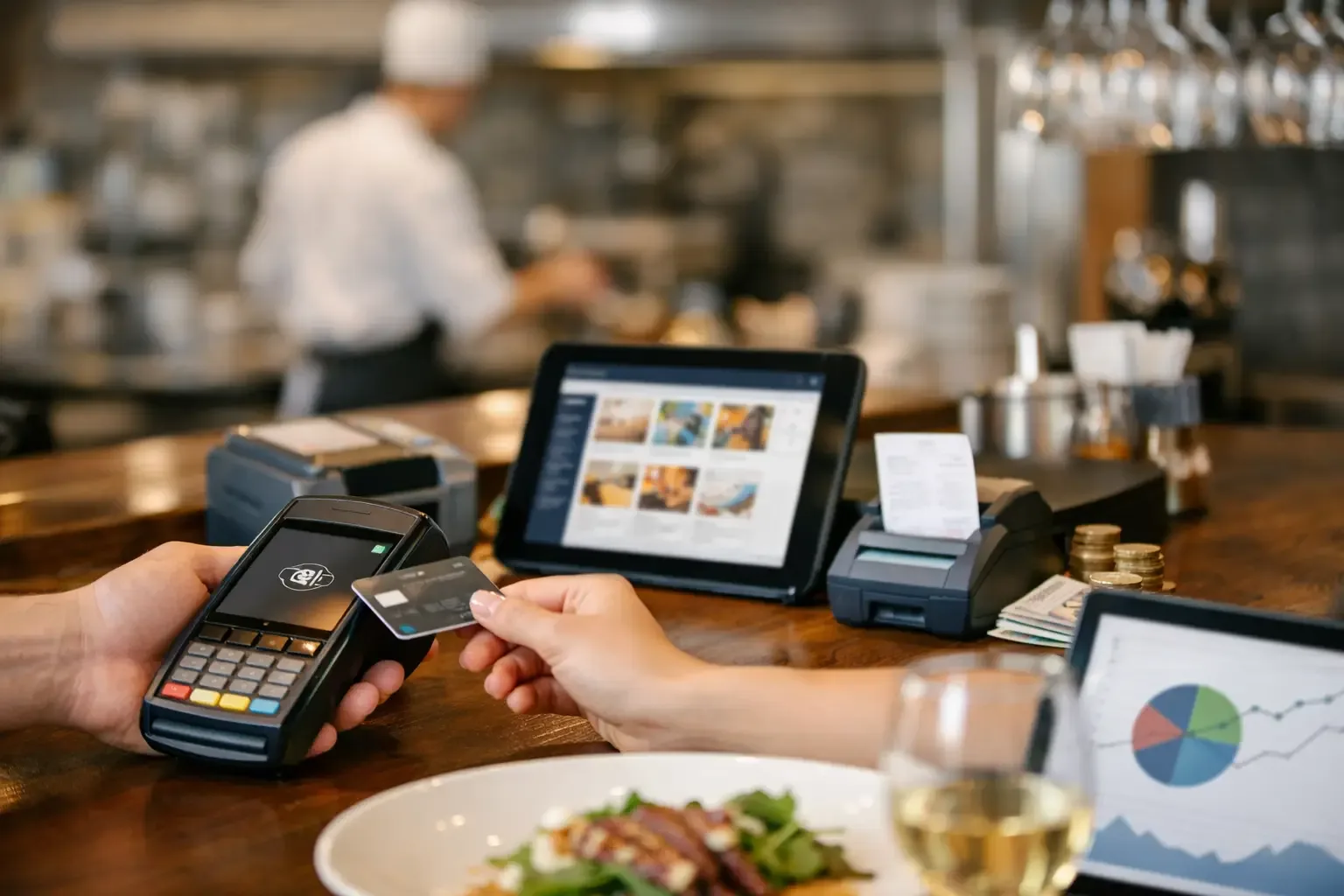
In a high-turnover restaurant, a few minutes of waiting at payment can cost a table, a review and the rhythm of the entire operation. Automating restaurant payments takes repetitive tasks away from the till, reduces errors at the end of each shift and gives the team more time for what directly shapes the customer experience: serving well.
Automation does not mean removing human service. It means organising the moment when the order is closed, paid and recorded, so that each member of staff steps in where they add value. The right solution depends on the service model, the volume of cash, the size of the venue and the integration needed with the point of sale.
Where payments hold up the operation
Payment may seem like the last stage of the meal, but it affects all the earlier ones. When there is a queue to pay, the counter is tied up, orders pile up and the team splits its attention between serving, taking money, giving change and checking what was ordered. At busy times, this pressure increases the likelihood of errors.
Cash also requires its own procedures. The float has to be counted, change checked, takings stored, discrepancies investigated and deposits prepared. Even with experienced teams, manual handling creates points of failure: a miscounted note, incorrect change or an entry that does not match the amount received.
In quick-service restaurants, cafés, patisseries and food outlets in shopping centres, speed is decisive. In a table-service restaurant, the challenge may lie in splitting the bill, group payments or the need to free up a table quickly. In both cases, the goal is the same: to make payment predictable, fast and controlled.
Automating restaurant payments: what changes
Automation means connecting equipment and processes so that the amount due is recorded, paid and validated with less manual intervention. It is not just installing a payment terminal. It is designing a flow in which customers know what to do, the team can keep track of the operation and management receives reliable information for decision-making.
With the right solutions, customers can order and pay at a self-service kiosk, or go to an automated payment point at the end of their meal. Where cash is used, an automated cash management system accepts it, validates it and dispenses the correct change. Staff no longer count coins and notes in every transaction, while the till keeps a more accurate record.
The improvement is particularly visible on three fronts: shorter service times, greater control over cash and less exposure of the team to checking tasks. The gain should not be measured only by the number of transactions per hour. Fewer interruptions, fewer till discrepancies and less time spent on daily close also count.
Kiosks for ordering and payment
Kiosks are especially suited to operations with a set menu, a high flow of customers and fairly standardised orders. Customers browse the menu on screen, select products, customise where applicable and complete payment. The information then follows the operational circuit defined by the restaurant.
This format can shorten queues at the counter and help spread orders over peak hours. However, it is not an automatic solution for every concept. In venues with more personalised service, an extensive menu or advice at the table, the kiosk should complement service, not replace it. Menu configuration, clarity of options and the position of the equipment largely determine how readily customers take to it.
Automated cash management
Despite the growth of electronic payments, cash is still present in many restaurant businesses. An automated management solution, such as the Cashmatic systems supplied by SelfPay Portugal, accepts notes and coins, validates amounts and dispenses change automatically.
The operational benefit is direct: cash no longer passes repeatedly through the team’s hands. Staff can take the order and look after the customer while the machine handles validation and change. For management, this helps reduce till discrepancies, simplify reconciliation and strengthen security at the point of sale.
The choice of equipment should take into account daily transaction volume, the share of cash payments, the space available on the counter and integration requirements. A venue with intense seasonal trade will have different needs from a neighbourhood café with footfall spread throughout the day.
The return lies in the process, not just the equipment
A kiosk or cash management machine only delivers consistent results when it is integrated into the restaurant’s routine. Before going ahead, it is worth identifying where queues form, how many manual steps each payment involves and how much time is spent cashing up.
For example, if the biggest delay happens because customers wait for the bill at the table, the priority may not be an entrance kiosk. If the problem is at the counter, where orders, payments and collections pile up, a self-service solution can have an immediate impact. If till discrepancies and change management are the main concern, automating cash may be the most suitable first step.
The assessment should weigh costs and benefits realistically. There is an initial investment, installation requirements, staff training and customer adaptation. On the other hand, there is less time spent handling cash, greater service capacity at peak times and more consistent transaction data. The return varies with the operation, but the decision is sounder when it is based on concrete indicators.
Indicators to assess before and after
To measure the effect of automation, it is not enough to see whether the venue seems faster. Compare data before and after implementation, using equivalent days and times. The most useful indicators include:
- average time between order completion and payment;
- number of transactions per hour at the busiest times;
- till discrepancies per shift and the time spent checking them;
- number of orders corrected, cancelled or repeated;
- waiting time as perceived by the customer and table turnover, where applicable.
This data allows you to fine-tune the operation. If a kiosk reduces queues but creates confusion when choosing products, the on-screen menu may need simplifying. If cash automation improves control but the counter is still congested, the division of roles within the team may need reviewing.
How to prepare the implementation
The implementation should start with a survey of the customer journey and the team’s work. Observe what happens from arrival to payment: where queues form, who validates the order, who takes the money and how exceptions such as discounts, refunds or split bills are handled.
Next, define the role of each payment point. In a quick-service venue, the kiosk can absorb simple orders, leaving the counter free for support and special cases. In a table-service restaurant, an automated payment point can reduce waiting time on the way out and make shift close more controlled.
Integration with the point-of-sale software deserves special attention. Products, prices, promotions, applicable taxes and order statuses must be aligned to avoid duplication or manual reconciliation. It is also essential to test real scenarios before going live: declined payment, lack of change, cancelled order, equipment temporarily unavailable and shift changeover.
Training should not be limited to technical operation. The team needs to know how to guide customers, step in without causing awkwardness and recognise when an exceptional situation calls for direct service. A well-managed roll-out presents automation as support for daily work, not as a barrier between the restaurant and its customers.
A faster experience without losing the personal touch
The best model is not necessarily the one that automates the most steps. It is the one that removes friction without changing the character of the service. A high-turnover restaurant may benefit from several self-service points, while a premium concept may prefer to automate cash control and keep assisted payment at the table. The decision should reflect the business’s value proposition.
Start by measuring one of your busiest shifts and pick the point where payment takes the most time or causes the most errors. By automating that moment with a solution tailored to the operation, the restaurant gains control without making service impersonal.


