
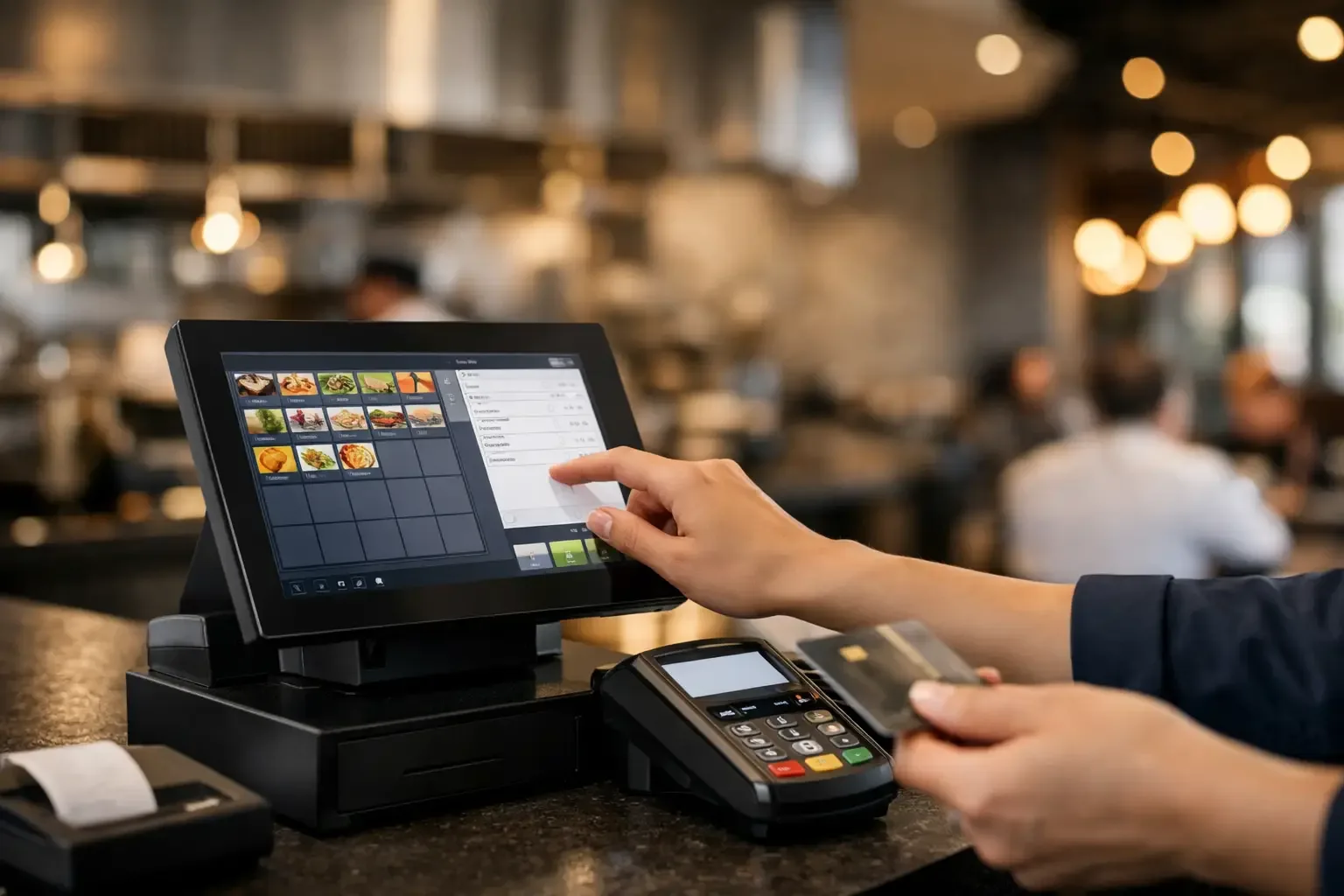
In a busy restaurant, the till is more than the point where a sale ends. It is where orders pile up, payments are handled, change is given, cancellations are confirmed and shifts are closed. When this process depends entirely on handling cash manually, a single busy period is enough for queues, errors and wasted time to appear. Restaurant till automation tackles this challenge by turning payment into a controlled, fast and verifiable process.
For managers and owners, the decision should not be seen simply as buying a piece of equipment. It is about reorganising a critical point in the operation: reducing repetitive tasks, protecting cash, freeing the team to serve customers and creating a more predictable experience for the customer.
Why the till shapes the restaurant’s operation
Profitability in the restaurant trade is influenced by operational details. An error in change, a miscounted note, a discrepancy at till closing or frequent pauses to refill coins may seem like isolated incidents. Over a shift, however, these situations eat up time, create tension in the team and make the business harder to control.
The impact is even greater in quick-service restaurants, shopping centre food courts, cafés, venues with terraces or operations in tourist areas. In these settings, customers expect to pay without delay. If payment is slow, the perception of the service deteriorates, even when the kitchen and dining room are running well.
Automation takes cash out of the hands of the person serving. The staff member enters or confirms the amount in the point-of-sale system, and the equipment receives, validates and stores the money and returns the correct change. The flow becomes more consistent and cash no longer passes between counter, drawer and several team members.
What till automation in a restaurant includes
Automation is not a single configuration. The right solution depends on the type of service, the volume of cash payments, the space available and the integration needed with the POS software. Even so, the principle is the same: automating the acceptance, validation, storage and dispensing of notes and coins.
At a traditional counter, an automated cash management system can be connected to the payment station. The customer hands over the money or uses the module provided, while the staff member stays focused on the order and on serving the customer. In self-service models, payment can be built into an ordering kiosk, allowing customers to choose, customise and pay for their order more independently.
This difference matters. A table-service restaurant with more personal service may benefit mainly from an automated till at the counter. A quick-service chain, on the other hand, may gain more from kiosks that take on part of the orders and payments. There is no universal solution. There is a configuration that suits the real flow of each venue.
Automated cash management
Automated cash systems, such as Cashmatic solutions, are designed to validate notes and coins, calculate change and keep money secure. For management, this means greater traceability of the amounts received and less reliance on manual counts at the start or end of the shift.
The gain is not limited to control. By reducing direct contact with cash, the operation reduces the chance of change errors and limits access to money. This separation between serving and cash handling is especially useful when there is staff turnover, several shifts or peaks in demand concentrated in a few hours.
Kiosks for ordering and payment
Self-service kiosks add another layer of efficiency. They allow some customers to order on a screen, choose menu options, pay and receive an indication for collection or table service, depending on the model chosen.
The goal is not to eliminate front-of-house or counter staff. It is to put each person where they add most value: welcoming guests, answering questions, checking quality and handling exceptions. When the simplest orders are handled autonomously, the team has more capacity to respond to the moments that require a human touch.
Operational benefits you can measure every day
The strongest argument for automating the till is operational. The reduction in errors is immediate when calculating and giving change no longer depends on manual processes. There is also less need to keep checking the drawer, look for coins or interrupt service to resolve discrepancies.
Security is another decisive factor. Cash is protected inside the equipment, with restricted access and defined operating rules. This reduces staff exposure, lowers the risk associated with visible cash on the counter and strengthens internal control. In busier operations, this can have a direct effect on the peace of mind of both team and management.
Speed deserves a balanced view. An automated till does not remove every queue on its own. If the menu is confusing, the kitchen is overloaded or the POS is slow, the problem remains. But when it is well integrated into the process, it removes steps at the moment of payment and prevents small till tasks from blocking the counter.
There is also an administrative benefit. Simpler shift closing and more reliable cash data help identify discrepancies quickly. Instead of ending the day with a long manual count, the manager can focus on analysing sales, costs, waste and service performance.
How to choose a restaurant till automation solution
The choice should start by observing the service, not the equipment. Before deciding on a solution, it is important to understand how many payments are made each day, what percentage involves cash, where queues form and how many people currently work at the till.
It is also essential to assess integration with the existing POS. Communication between systems should ensure that the amount recorded on the order matches the amount received, without duplicating tasks. A stand-alone solution may solve part of the problem, but a well-planned integration offers greater control and a smoother experience for the team.
The physical space deserves equal attention. Till equipment must fit the counter and the way the venue works, without getting in the way of service. With kiosks, circulation, accessibility, menu visibility and proximity to the order collection area all need to be considered.
Finally, it is worth looking at support and implementation capability. The technology has to be configured for the reality of the restaurant, and the team needs practical training. SelfPay supports this adoption with specialised solutions for restaurants, combining automated payment and self-service equipment with an approach focused on day-to-day operations.
Implementing without disrupting service
A successful implementation does not start on the day the equipment is installed. It starts with clearly defined rules: who handles exceptions, how refunds are made, what to do during temporary unavailability and what information each staff member should check.
It is advisable to start operating with close support, especially at the busiest times. The team should test payments, change, cancellations and closing before relying fully on the new process. This phase makes it possible to adjust procedures and show customers how to use the new payment point, without creating uncertainty at the counter.
Internal buy-in is decisive. If staff understand that automation reduces control tasks and does not complicate service, the change will happen faster. Training should be short, concrete and focused on real service situations, rather than limited to the technical features of the equipment.
Automating to serve better
Till automation does not replace hospitality, food quality or dining room management. What it does is create the conditions for these elements to receive more attention. Less time counting coins and correcting change means more time to welcome guests, deliver orders accurately and respond to customers.
For a restaurant that wants to grow with control, the starting point is simple: analyse where payment slows down the operation and choose a solution that keeps pace with it. When the technology is sized for the real service, the till stops being a source of friction and starts supporting faster, safer and more consistent service.