
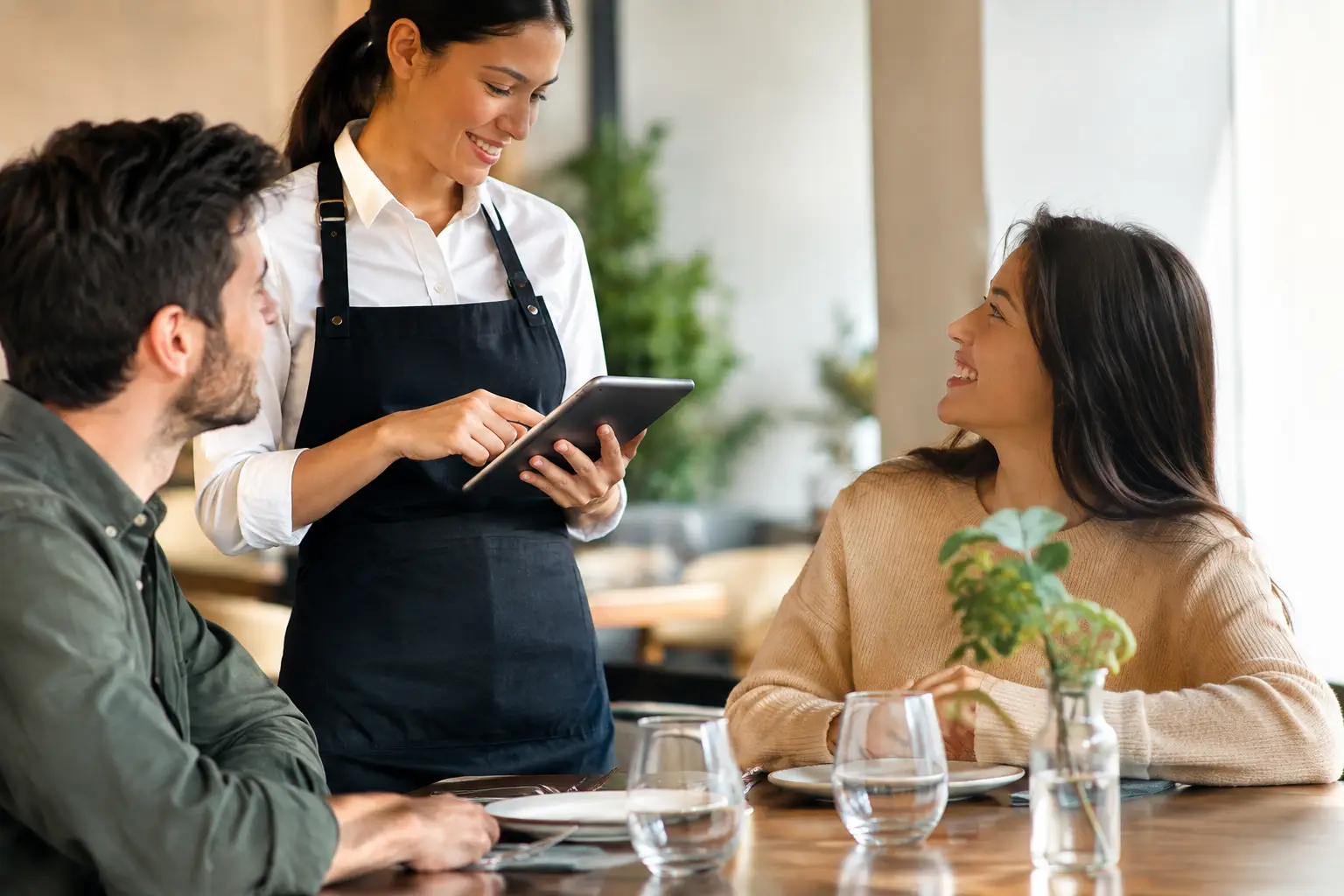
A table waiting to order, change a dish or pay is taking up more than a seat in the dining room: it is putting pressure on the team, limiting table turnover and affecting how the service is perceived. Digitising table orders makes it possible to handle these moments faster and with more control, provided the solution is designed around the restaurant’s real operation and not just as another device on the counter.
For busier restaurants, terraces, venues with several dining rooms or small teams, digitisation can cut unnecessary trips, communication errors and dead time between the kitchen, the floor and payment. The result is not replacing human contact. It is giving the team better conditions to make that contact more useful.
Why digitising table orders has an operational impact
In traditional service, the waiter takes the order, writes it on a pad or memorises it, walks to the point of sale, enters the information into the system and sends it to the kitchen. Each handover adds time and creates an opportunity for mistakes: a forgotten modifier, a wrongly identified table, an item entered twice or a change that never reaches the kitchen.
With orders recorded digitally at the table, the information enters the system in a more structured way. Dishes, extras, dietary restrictions and notes go to the kitchen or bar without depending on manual transcription. This is especially relevant at peak times, when speed of service tends to compete with accuracy.
There is also a gain in visibility. The floor manager can follow table status, pending orders and preparation times without relying solely on verbal communication. When the operation is integrated, settling the bill is no longer a task of searching and checking but a predictable step in the service.
What should change in the service flow
Digitising does not mean putting a QR code on every table and hoping the problems disappear. There are several possible models, and the choice depends on the venue’s concept, its customer profile and service volume.
In a table-service restaurant, mobile devices used by the team may be the most balanced option. The waiter still welcomes guests and makes recommendations, but records the order straight away. In quick-service concepts, food courts or high-volume venues, a self-service kiosk may be more suitable, allowing customers to select, customise and pay before the order goes into production.
It is also possible to combine models. A restaurant can take digital orders through its staff at indoor tables and offer self-service on a terrace, in a breakfast area or at specific times. The aim is to remove friction where it exists, not to standardise the experience at any cost.
Ordering, production and payment must communicate
Digitisation only brings consistent gains when it connects the critical stages. Recording an order on a standalone device may speed up order taking, but it does not solve cash reconciliation, communication with the kitchen or splitting bills.
A well-configured solution should link each order to its table, route it to the right preparation point and update the bill in real time. When it is time to pay, the team should be able to view what was consumed without re-entering data. Integration with payment terminals, POS systems and cash management equipment reduces repetitive tasks and limits discrepancies at the end of the shift.
This is particularly important for businesses that accept cash. If cash payments still account for a significant share of sales, automating the acceptance of cash and the return of change helps strengthen till control. Speed at the table should not create more work at the end of the day.
Concrete benefits for management and staff
The first advantage is fewer errors. Fewer manual entries and fewer handovers of information mean a greater chance that the order reaches the kitchen correctly. This reduces waste, remade dishes and awkward moments in front of the customer.
The second is productivity. A team that does not need to keep returning to the fixed terminal can spend more time looking after tables, suggesting products and dealing with exceptions. Instead of adding staff to cope with peaks in demand, the restaurant may be able to absorb more service with better organised processes.
The third is decision-making capacity. Order data makes it possible to identify peak hours, best-selling items, frequent combinations and areas of the dining room with higher turnover. These indicators do not replace management experience, but they give it a more objective basis for adjusting menus, rotas and production.
Finally, there is a clear improvement in the customer experience. Nobody chooses a restaurant for its technology alone, but customers value a service in which the order is confirmed, special requests are respected and paying does not involve a long wait. Technology should be discreet, reliable and focused on that outcome.
What to assess before implementing
Before choosing equipment or software, it is worth mapping the order journey. How many times does the team handle the same information? Where do queues build up? How are changes communicated? Is payment made at the table, at the counter or at a dedicated point? These answers help avoid buying technology that solves a secondary problem and leaves the main one in place.
Ease of use deserves attention. In a restaurant with staff turnover, overly complex interfaces increase the need for training and can slow down service. Menus should be clear, allow quick changes and reflect the structure of the menu card. If the team cannot use the system confidently on a Saturday night, the implementation is not finished.
The reliability of the infrastructure is also decisive. Wi-Fi, device battery life, kitchen printers, POS integration and technical support should all be treated as parts of the same project. A failure at any of these points can force a temporary return to manual processes, precisely during the most critical period.
SelfPay supports this type of operational transformation with self-service and payment solutions suited to the context of each business. More than introducing a piece of equipment, the focus should be on designing a service flow that is faster for the customer and more controlled for management.
Digitising table orders without losing service
There is a legitimate concern in restaurants with attentive service: that technology will make the experience impersonal. This happens when the customer is given a task they do not want to do, or when the device becomes a barrier between the waiter and the table.
The alternative is to use digitisation to remove administrative tasks from service. The team can still explain dishes, recommend wines, confirm intolerances and follow the pace of the meal. Digital recording ensures that this attention reaches the operation without noise.
Not every venue needs to encourage customers to order on their own. In a signature restaurant, the assisted model may better preserve its positioning. In a café with a busy lunchtime, self-service can be decisive in cutting queues. The right solution is the one that respects the business proposition and improves its most significant bottleneck.
How to prepare a lower-risk implementation
Start by defining simple metrics: average time until the order is recorded, number of errors, waiting time for payment, sales per shift and till discrepancies. This data lets you measure whether the change is producing concrete gains, instead of relying on impressions alone.
Then test the new flow in a controlled area or time period. Involving the team from the start is essential, because staff know the daily exceptions: tables that ask to split the bill, customers with special requests, unavailable products or last-minute changes. The configuration should take these situations into account, not ignore them.
Finally, communicate the change to customers simply. A kiosk or digital payment should be intuitive, visible and backed by initial support. Adoption is faster when customers immediately see the benefit: less waiting, more independence or a more convenient payment.
The best decision is not to digitise because it is a trend. It is to identify where service loses time, where the till loses control and where the team can no longer serve well. When technology answers these questions, every order contributes to a more predictable operation and to a dining room with more time to serve well.


