
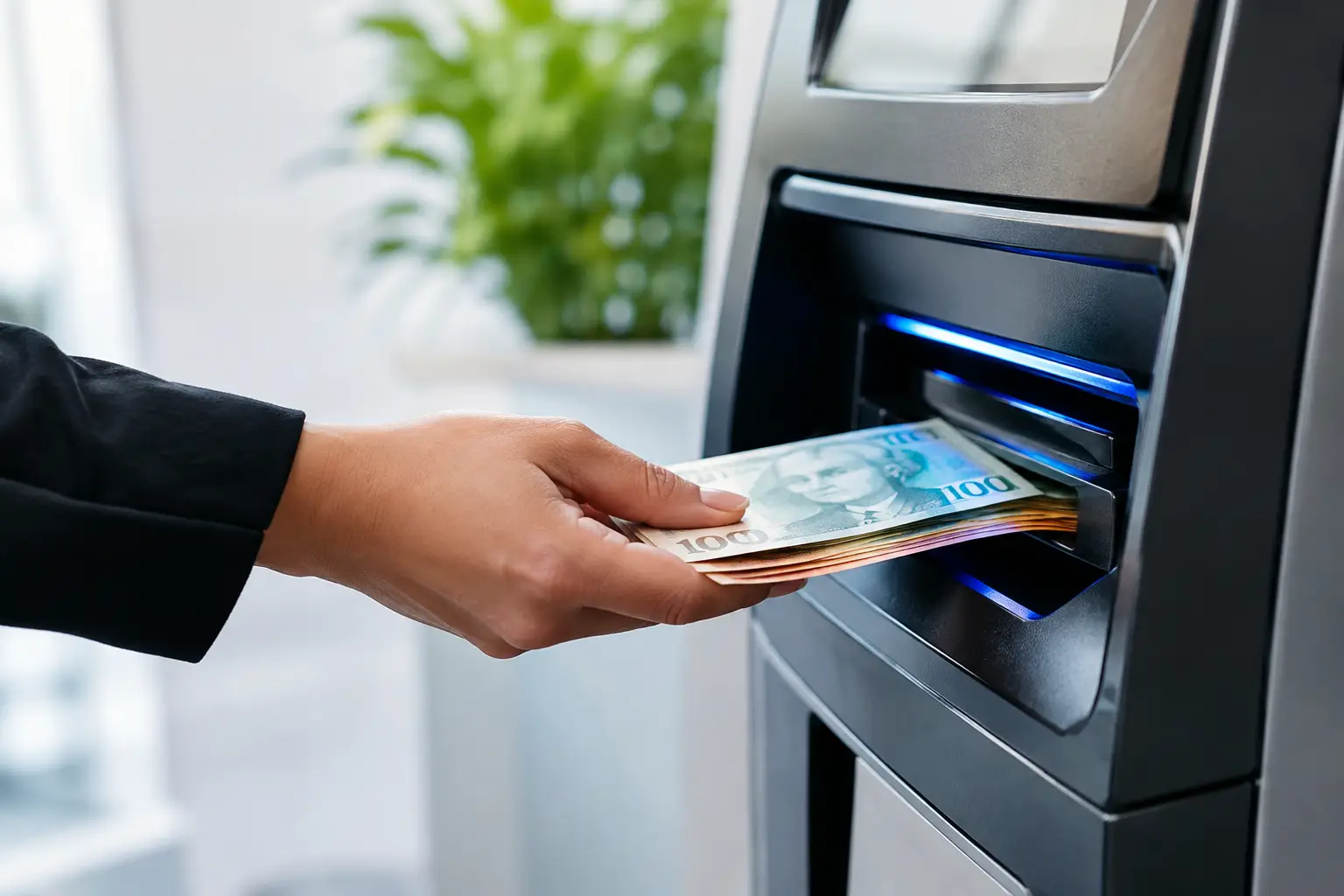
At a busy time, being able to take cash without slowing down service makes a difference at the till, in the customer experience and in operational control. That is why the question “does Cashmatic accept banknotes?” is a common one among managers in restaurants, retail, self-service laundrettes and other businesses that take in-person payments. The answer is yes, but what matters lies in the details of the configuration, the model and the payment flow defined for each point of sale.
A Cashmatic system is designed to accept, validate, store and, on certain machines, recycle cash to give change. However, confirming that the machine accepts banknotes is not enough. You need to understand which notes it accepts, in what condition, in which currency, with what capacity and how that management fits into the company’s daily procedures.
Does Cashmatic accept banknotes? Yes, with automatic validation
Cashmatic machines designed for automated cash management can accept notes and coins, validating the cash inserted by the customer. Instead of a member of staff taking, counting and storing the amount by hand, the system handles that step within the machine itself.
When a note is inserted, the validator analyses its physical and security features to determine whether it is accepted. If the note meets the configured parameters, the amount is recognised and recorded in the transaction. If not, it is returned to the customer. This reduces the need for operator intervention and limits cash-handling errors.
Even so, acceptance should not be seen as a generic feature that is identical in every case. The range of machines, the configuration installed and the business’s requirements directly affect which notes can be processed. Technical confirmation should be obtained before implementation, especially when the business handles a high volume of cash or deals with very different average purchase values.
What determines which notes a Cashmatic accepts
A system’s ability to accept banknotes depends on several operational factors. The first is the model chosen. There are solutions designed for different transaction volumes, storage needs and service scenarios. A quick-service restaurant, for example, will have different requirements from a retail shop with higher average baskets or a laundrette without permanent staff.
The configured currency is equally decisive. For businesses in Portugal, the operation is usually set up for euro banknotes, but the configuration should reflect the actual context of use. A business in a tourist area may have customers who try to pay in foreign currency, and the machine should not be presented as able to accept money it has not been configured for.
Denominations also need to be considered. A solution may be set up to accept several euro notes, but change management requires further analysis. Being able to accept a high-value note does not in itself mean it is operationally sensible to do so in every situation. If the machine does not hold enough cash to give change, the customer experience may suffer.
The physical condition of the notes is another practical factor. Badly damaged, folded, damp or heavily worn notes may not be recognised by the validator. This is not simply a fault in the machine: it is a consequence of the criteria needed to validate cash securely. Setting a clear on-screen message and a support procedure for these situations avoids confusion at the payment point.
Validation is not just counting
The difference between a conventional cash drawer and an automated management solution lies in control of the process. The machine does not simply take a note and assign it a value. Validation separates accepted cash from rejected cash, records the transaction and reduces staff’s direct contact with cash.
For management, this means more consistent cashing up. The amounts received are linked to the transactions carried out, reducing discrepancies caused by incorrect change, counting slips or unrecorded withdrawals. The benefit is particularly relevant for businesses with several shifts, rotating teams or demand peaks concentrated into a few hours.
Accepting notes and giving change are linked decisions
The cash acceptance policy should be defined together with the change strategy. A machine may accept a note, but the operation is only effective if it can complete the payment without unnecessary staff involvement.
For this reason, the choice of solution should take into account the stock of notes and coins available, how often change needs replenishing and the typical purchase value. In a café, with many low-value payments, coin availability may be more critical. In a specialist shop with a higher average purchase, accepting higher-value notes may need closer assessment.
What to confirm before installing a Cashmatic system
The decision should start with an analysis of the real payment flow, not just the machine’s technical data sheet. Knowing how many customers pay in cash, at what times, with which notes and how often change is needed makes it possible to size the solution more safely.
First, confirm which euro denominations the planned model and configuration accept and recycle. This information should match the notes that appear most often in the business. Second, assess storage capacity and change autonomy against the operation’s daily volume.
Third, define how the machine communicates with the point-of-sale software. The integration should ensure that the amount due is transmitted correctly, that the transaction is confirmed and that the cash-up has consistent information. Finally, set procedures for exceptions: rejected notes, lack of change, opening a shift, cash collection and customer assistance.
These points may seem operational, but they determine the return on investment. A well-configured machine reduces manual tasks. A machine installed without adapting to the business flow can create new interruptions at the till.
Use varies by sector
In restaurants, speed is the most visible factor. At lunch or dinner, customers expect to pay without queuing and staff need to keep up the pace of service. Automatic banknote acceptance frees staff for service, while the system validates the cash and calculates the change for the transaction.
In retail, the main gain tends to be control. Shops deal with different operators, long shifts and a wide range of payments. Automating cash acceptance reduces the risk of cash discrepancies and makes end-of-day checks more predictable.
In self-service laundrettes, autonomy is key. Customers need to pay simply, often without staff on site. In this context, it is essential that the solution accepts denominations suited to the price of the service and keeps enough change to match expected demand.
In hospitality and reception operations, the criteria may differ. Cash payment is part of an experience that should convey security and professionalism. Automation helps to organise service, but it must coexist with internal control rules, cash limits and financial reconciliation processes.
Security and maintenance are part of the answer
The question of whether a Cashmatic accepts banknotes does not end when the money is inserted. The security of the cash after acceptance is just as important. By reducing staff’s direct access to cash, the business can lower its exposure to errors, losses and till discrepancies.
But automation does not remove the need for procedures. The manager should define who can carry out collections, when they take place, how they are recorded and what checks are made at the end of a shift. Preventive maintenance and proper cleaning of components also help maintain reading quality and avoid interruptions.
It is advisable to prepare staff to explain simply why a note might be rejected and which alternative payment method is available. Customers accept an isolated issue more readily when they get a quick, clear answer without waiting for the whole process to be checked by hand.
The right choice is not just about making sure the machine takes cash. It is about creating a payment flow in which every accepted note contributes to faster service, a better-controlled till and an operation less dependent on manual tasks. It is in this balance between technology, configuration and operational routine that a Cashmatic solution shows its value to the business.