
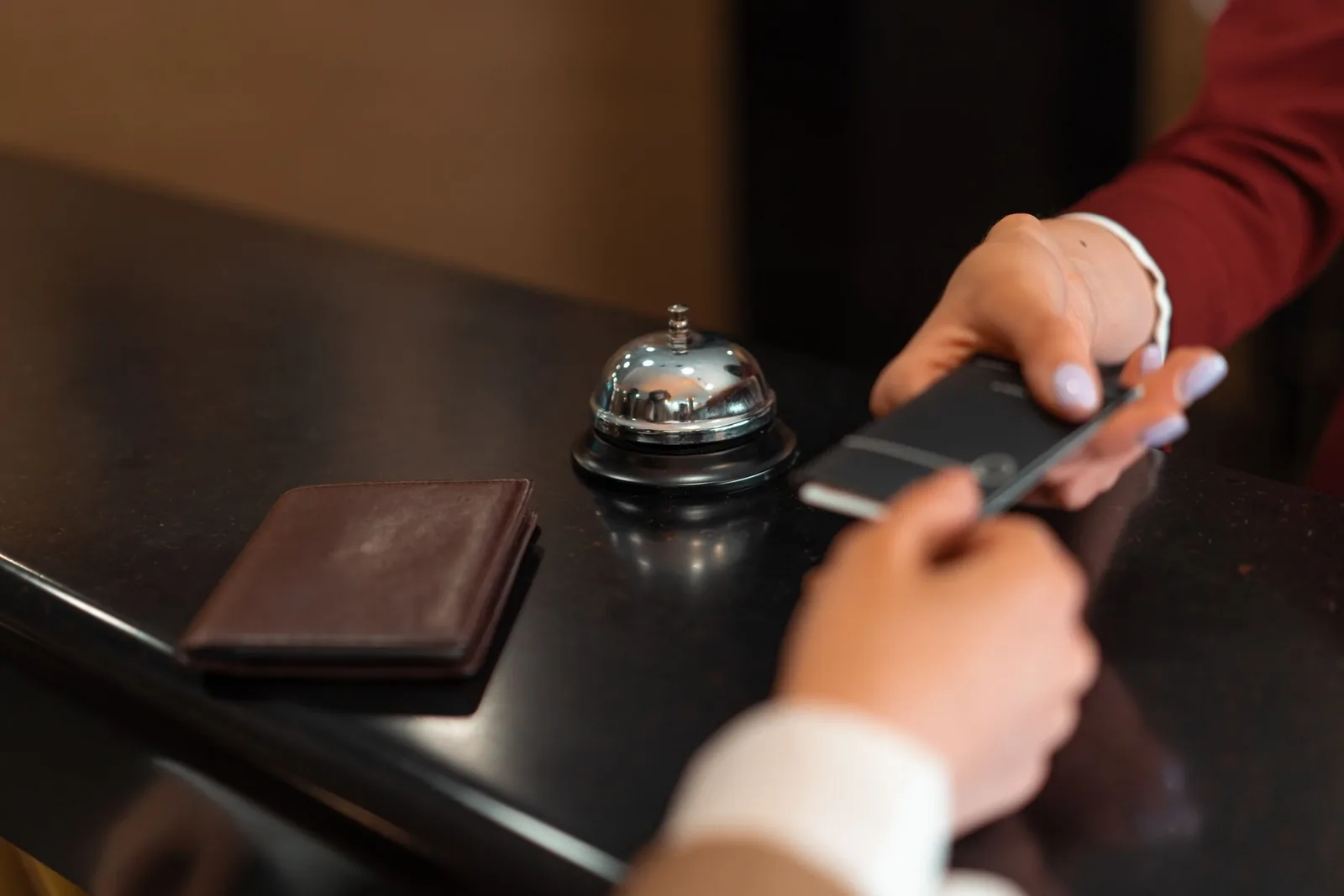
A late arrival, a queue at the desk after an excursion or a guest who simply wants to collect their key should not require the whole reception team. Understanding how to automate hotel reception starts by identifying these moments of friction and redesigning the process so that each task is handled through the most efficient channel.
Automation is not meant to eliminate hospitality. It is meant to take repetitive, administrative and time-dependent tasks away from the team, so they can focus on welcoming guests, handling special requests and service quality. For hotels in tourist areas, with peaks in demand or small teams, this change has a direct impact on operations and profitability.
Why automate hotel reception
Reception is a critical point in the guest experience and in the hotel’s day-to-day management. It is where bookings are confirmed, documents collected, payments processed, access issued and questions answered. When all these steps depend solely on face-to-face service, busy periods result in queues, pressure on the team and a greater likelihood of error.
An automated check-in system allows guests to complete part or all of the process at a kiosk, on their own and 24 hours a day. The property can therefore handle arrivals outside normal hours, reduce waiting times and keep service organised even when reception is dealing with several requests at once.
The gain is not only operational. Automation brings greater consistency to identification, payment and the issuing of keys or cards. It also provides useful management data, such as arrival times, kiosk usage and the main points where guests abandon the process. This information helps adjust rotas, pre-arrival communications and internal procedures.
Start with the guest’s real journey
Before choosing equipment, the arrival journey needs to be mapped. The question is not just whether the hotel needs a kiosk. It is understanding which tasks should move to self-service and which require human intervention.
Analyse the process from booking confirmation to room access. Does the guest receive instructions before arrival? Can they fill in their details in advance? Is the booking validated automatically? Are outstanding payments handled at the same time? Does the system issue a card, code or other means of access? Each of these answers influences how the solution is configured.
It is also important to distinguish between different guest profiles. A city property with short stays may prioritise speed and autonomy. A leisure hotel with families or international guests may need multilingual interfaces, especially clear instructions and reception support at certain times. In smaller properties, automation can make it possible to operate without a permanently staffed desk, provided there is a well-defined assistance process.
Integrating check-in, payments and room access
The effectiveness of an automated reception depends on the connection between systems. A stand-alone kiosk that does not communicate with the hotel management software creates duplicated tasks and reduces the benefits of automation. The aim is for booking data, payment requirements and room allocation to be handled in a single flow.
In practice, guests identify their booking using a code, document or personal details, confirm the required information, pay any outstanding amounts and receive access to their room. If the process is properly integrated with the PMS and access control, staff no longer have to enter the same data into several platforms.
Roommatik solutions, distributed in Portugal by SelfPay, were developed for this model of self-service hotel check-in. When selecting equipment, consider technology integration, accepted payment methods, document scanning capability, key issuing and the type of installation required, whether indoors, outdoors or built into the desk.
Payment should be part of the process
Separating check-in from payment creates an extra step and often a reason for the guest to return to the desk. Where applicable, the kiosk should allow outstanding amounts to be settled securely and clearly show the amount, the booking reference and the proof of payment.
This integration reduces billing errors, improves financial control and simplifies daily reconciliation. For the property, it is also a way of reducing reliance on cash at check-in. If the hotel accepts cash payments, automated cash management can add security and control, but it should be assessed according to transaction volume and guest profile.
Security is not a technical detail
Automating does not mean transferring risk to a machine. The solution must protect personal data, ensure that access is given to the right guest and keep auditable records of transactions. Compliance with the identification and reporting procedures that apply to tourist accommodation should be built in from the design of the process.
It is essential to define what happens with a booking without valid payment, an unreadable document, a last-minute change or a failure to issue a card. The kiosk should guide the guest with simple messages, but the operation needs an exception plan and a reliable support contact. Autonomy works best when there are clear answers for cases that fall outside the norm.
Choosing the right automation model
There is no single configuration for every property. The best solution depends on the number of rooms, the volume of arrivals, opening hours, the software already in use and the level of service the hotel wants to offer.
A fully automated reception may suit tourist apartments, compact hotels or operations with frequent out-of-hours arrivals. A larger property, on the other hand, might use kiosks to absorb check-in peaks while keeping receptionists available for personal welcome, groups, special requests and the sale of additional services.
The location of the equipment deserves the same attention. A kiosk at the entrance makes autonomous access easier, but requires adequate security, lighting, connectivity and weather protection. Equipment placed indoors can benefit from greater control, although it depends on the guest first being able to enter the building. The decision should be based on the real operation, not just the look of the space.
Preparing the team to work differently
Technology reduces tasks, but it does not remove the need for clear procedures. The team must know how to monitor the system, check the status of transactions, step in when exceptions arise and explain the process to guests without creating unnecessary dependence.
This change also requires internal communication. Reception needs to know which bookings can use the kiosk, how to handle late check-in requests, who confirms pending issues and where incidents are recorded. When these criteria are not defined, automation can create confusion instead of efficiency.
Communication with guests is equally decisive. A message sent before arrival should state clearly that self check-in is available, what information is needed and how to ask for help. It is not about forcing every guest to use the same channel. It is about offering a fast, well-explained alternative while keeping personal service for those who value or need it.
Measuring results after implementation
Implementation is only complete when the property tracks the results. Average check-in time, the percentage of guests who complete the process on their own, the number of staff interventions and payment incidents are useful indicators. Comparisons should be made between similar periods, taking seasonality, occupancy and booking profile into account.
It is also worth looking at the impact on the team. If the kiosk reduces queues but receptionists frequently have to fix the same errors, instructions, integrations or configuration will need reviewing. If guests abandon the process at a particular stage, there may be too much information, a lack of clarity or a requirement that should have been handled before arrival.
Automating hotel reception is an operational decision, not just an equipment purchase. When the technology is connected to the PMS, payments, access control and well-defined procedures, the property gains availability, control and the capacity to welcome guests better. The most valuable result is not a reception without people, but a team with more time to do what a machine cannot: look after each guest’s experience.


