
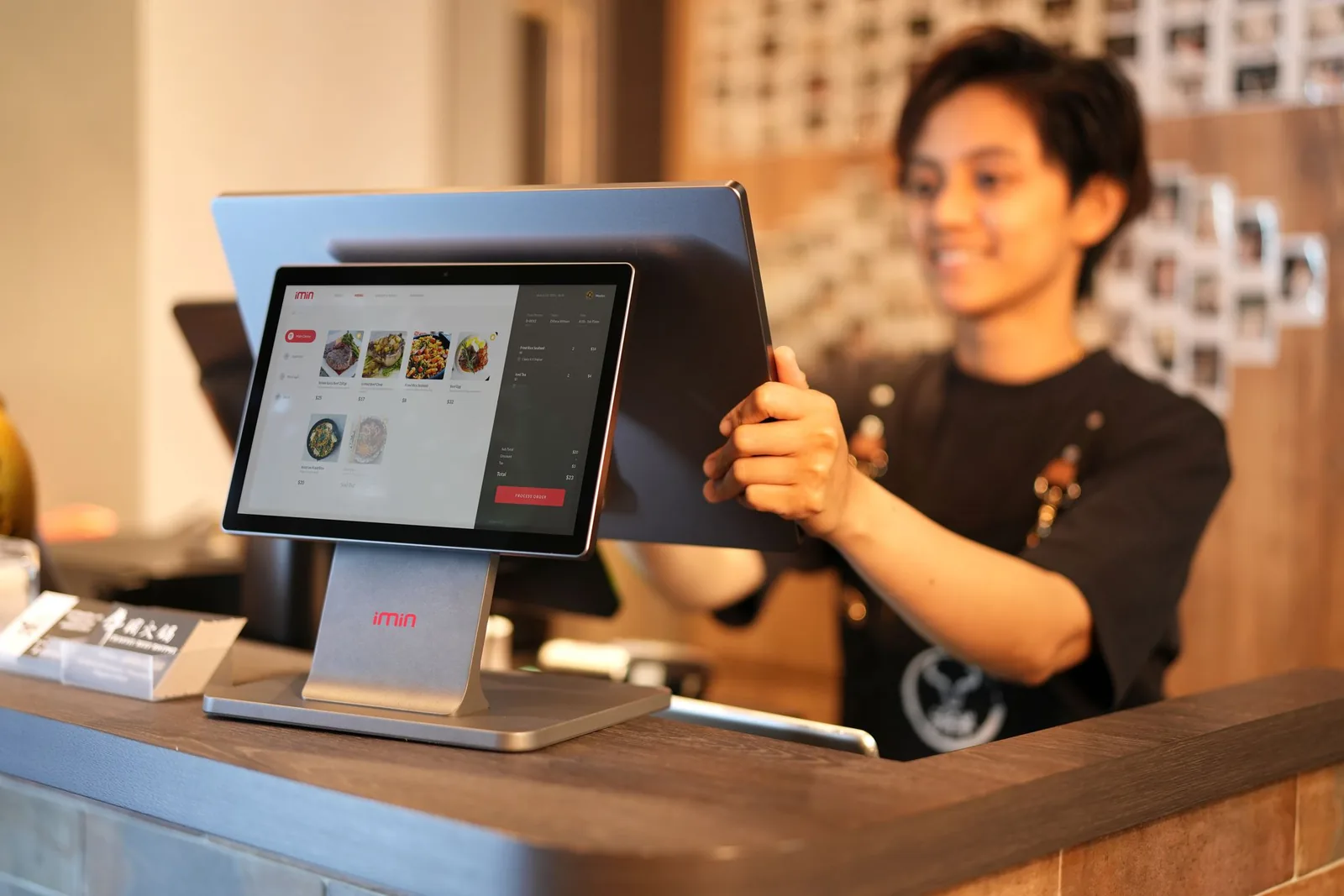
A point of sale stops being competitive when payment creates queues, cashing up takes too long and staff have to interrupt service to count money or fix errors. Knowing how to modernise a point of sale therefore means reviewing the whole service flow: from the moment the customer places an order or chooses a product through to payment, issuing the receipt and day-to-day control of the operation.
Modernising does not mean adding more technology to the counter without a plan. It means removing manual tasks that slow down service, reduce visibility over the business and expose the operation to errors or losses. For a restaurant, a retail shop, a hotel or a self-service laundry, the priority differs, but the goal is the same: serve customers better, operate with more control and free the team for higher-value work.
How to modernise a point of sale without creating new friction
The first step is to identify where the real bottlenecks are. In many businesses, the problem is not just slow payment. It is the sequence of small tasks that pile up: taking cash, giving change, checking amounts, correcting records, storing money, reconciling and preparing the cash-up. Each one requires time and attention, especially at busy times.
A well-planned modernisation starts by measuring these moments. Observe how long a transaction takes, how many interventions are needed to complete a sale and how many errors appear at cash-up. Also analyse queuing periods, the share of cash and card payments, the orders that reach the counter and the tasks that take the team away from the customer.
This analysis helps you decide what to automate first. Not every business needs the same equipment, nor should it change every process at once. A small venue with direct service may benefit above all from automatic cash management. A restaurant with a high volume of counter orders may gain more from self-service kiosks. In a hotel, the need may lie in self check-in outside the front desk’s busiest hours.
Start with the flow, not the equipment
Technology should adapt to the way the business works, not force the business to work around the technology. Before choosing a solution, it helps to answer three questions: where do queues form, where do errors occur and where does the team lose the most time on repetitive tasks?
If the queue forms at payment, the priority is the till and payment methods. If staff spend much of their shift taking simple orders, self-service can relieve that pressure. If the problem is cash handling and controlling till discrepancies, cash automation will have a more direct impact.
The decision should also take into account integration with the existing point-of-sale software. A standalone solution may meet a one-off need, but an efficient operation depends on consistency between sales, payments, stock, invoicing and reporting. Technical compatibility should be validated before implementation, as should support and maintenance procedures.
Automating payment to gain operational control
Payment is one of the areas with the greatest potential for immediate improvement. It is also a sensitive area: any delay, failure or error is noticed directly by the customer. At the same time, it is a critical point for the financial control of the business.
Automatic cash management systems accept, validate, store and dispense change without staff having to handle money. This reduces change errors, limits direct access to cash and simplifies the cash-up. Instead of relying on manual counts and lengthy checks, the manager gains greater accuracy over the amounts handled at each till.
Fewer till discrepancies is an obvious benefit, but not the only one. Automation also protects the team, because it reduces individual responsibility for physical cash. In a business with high staff turnover or several shifts, this control becomes particularly relevant.
There is, however, a decision to make. Not every business should abandon assisted service. In shops where advice is a central part of the sale, technology should support staff, not distance them from the customer. An automated payment system can keep the human contact at the counter while relieving the team of counting notes and coins.
Kiosks when speed defines the experience
In quick-service restaurants, cafés, high-traffic areas and repetitive service operations, self-service kiosks can reorganise service capacity. Customers browse the menu on a screen, customise their order, pay and receive the information they need without waiting for a member of staff to be free at the counter.
The result is not just a shorter queue. The team can focus on preparation, delivery, keeping the dining area clean or helping customers who need attention. The operation gains capacity without a proportional increase in the number of people working at the till.
Even so, a kiosk requires a simple experience. Overly complex menus, unclear screens or too many steps can simply move the queue from the counter to the kiosk. The configuration should reflect the best-selling products, the most frequent extras and the customers’ language. Adoption improves when use is intuitive from the very first interaction.
Adapting modernisation to the business sector
Automation has the most impact when it responds to the particular features of each operation. In retail, fast payment and till accuracy are essential, especially at peak times, during promotions and in seasonal periods. An automated cash solution helps keep service flowing and offers greater control over the amounts received.
In restaurants, the challenges pile up between orders, payments, menu changes and pressure at lunch and dinner. Kiosks can absorb simpler orders, while payment systems cut the time lost on change and checks. The balance between self-service and assisted service should match the venue’s positioning and its customer profile.
In hospitality, modernising the front desk makes it possible to serve guests who arrive outside the most predictable hours or who prefer an independent process. Automated check-in systems reduce waiting times and ensure service is available for simple procedures, freeing the front desk for welcoming guests, personal support and handling special situations.
In self-service laundries, customer independence is part of the business model itself. Suitable payment equipment and clear processes are key to reducing in-person interventions, ensuring continuity of service and simplifying day-to-day management. Here, system reliability and ease of use matter as much as speed.
Preparing the team and measuring results
Implementing a new point of sale does not end with installation. The team needs to understand the new flow, know how to deal with exceptions and be able to explain the process to customers when necessary. Training should be practical, focused on daily tasks and adapted to each role.
It is also advisable to define indicators before the change. Average service time, transactions per hour, till discrepancies, cash-up time, payment volume by method and customer satisfaction are useful metrics for assessing the return. Without this comparison, it is harder to tell whether the solution is having the expected impact or needs adjusting.
Communication with customers deserves attention. Some people quickly embrace self-service; others prefer guidance, especially in the first few days. Clear signage, an available team and simple instructions help make the transition feel natural. The aim is not to impose technology, but to offer a faster and more consistent experience.
Choosing a solution with continuity in mind
When assessing suppliers, the initial price should not be the only criterion. Equipment quality, integration with existing systems, technical support capability and knowledge of the sector directly affect business continuity. A failure in payment or service has an immediate impact on sales and on how customers see you.
A specialist approach makes it possible to select solutions suited to the reality of each business, instead of applying the same model to everyone. SelfPay works precisely with payment, self-service and front desk automation technologies, designed for in-person operations seeking greater security, efficiency and control.
Modernising a point of sale means creating the conditions for every transaction to be simpler for the customer and more predictable for the business. When technology removes repetitive tasks and strengthens operational control, the team gains time for what it still does best: serving, advising and solving problems.


